
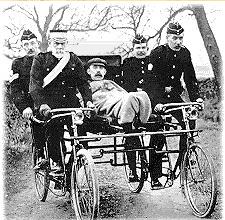
 Iatrogenesis is not a concept that is confined to quackery, but like most of the words in my Quack Words series it tends to show up more often than not on quack web sites and so can be a good quackometer word.
Iatrogenic illness covers the concept of harm having been done by the healer. Harm could come from many quarters including mistakes in diagnosis or treatment, professional negligence, adverse reactions to drugs, infections acquired during surgery or in the ward, and mis-presciption. Undoubtedly, all these things happen and quite regularly too. But, the charge by quacks, when discussing iatrogenic illness on their web sites, is that medical greed and their ‘addictions’ to using toxic drugs kill hundreds of thousands of people unnecessarily. The conspiracy of ‘Big Pharma’ wants to keep us ill and sell us more toxic and harmful drugs.
Often figures are presented that are used to show that iatrogenic death is the third or fourth leading cause of death in the western world. A typical example is given here where figures for adverse drug reactions cause 106,000 deaths per year in the USA.
On this basis, doctors look like mass murderers. Their pursuit of profit and the monopoly of health care is causing genocidal-scale evil. By contrast, alternative medicine is presented as risk-free, gentle, holistic and free from commercial influences.
On the face of it, the charge is very serious. Is it that simple?
In short, the sort of analysis used by quacks to present real medicine as a terrible killer is completely devoid of the medical context of the supposed deaths and concentrate only on negative outcomes and ignore positive outcomes of treatment. These figures are unbalanced and deliberately misleading.
For example, looking at the first reference given in the link above (Lazarou et al), it is worth noting that the authors point out that the major cause of problems was due to known highly toxic treatments, such as warfarin. These sorts of drugs are given to people who are seriously ill and at risk of dying. If a small percentage experience an adverse drug reaction then that has to be balanced against the overall benefits of lives saved by the treatment. In considering seriously ill patients who would inevitably die without intervention one should be able to take risks with known drugs in order to save a high number of them. Deaths in this case are a special sort of failure – not a case of negligence or malpractice – but a part of the risks of doing real grown-up medicine. Hospitals have to deal with seriously ill people and sometimes have to be quite aggressive in their treatments. The alternative is certain death. Most quacks are spared this confrontation with reality as they treat their headaches and skin complaints.
Undoubtedly, the side effects could be reduced by better understanding of the drug and that is exactly why medical research is done, with trails and experiments. For anti-rational alternative medicine quacks to use such data as a way of highlighting the ‘evils’ of real medicine is an act of propaganda and scaremongering. It is shameful denigration of a profession that has to daily make life or death decisions with the most complex system in the known universe – the human body.
If you are not convinced, an analogy: ambulances are responsible for many accidents, injuries and deaths every year. They charge at high speed through populated areas, ignoring road conventions and distracting other drivers. If you were to publish a table of injuries and deaths due to ambulances, they would look quite starting. In fact, one source reports an average of one collision each day involving an ambulance in the UK. Not all result in death of course, but still a big number.
Would you ban ambulances and set up alternative, low pollution, holistic and carbon neutral cart and horse emergency transport? How about bicycle ambulances? Of course not. There is no such thing as alternative and complementary ambulances. Even quacks get in the ambulance after a bad road accident. The reason is that by taking appropriate risks, ambulances save thousands of lives every year. Seconds counts when hearts and lungs are failing or you are bleeding badly. The lives saved vastly outweigh the iatrogenic injuries caused. It is up to society to balance the benefit and risks and choose how ambulances should behave.
The same goes with medicine. The culture of informed consent requires doctors to discuss the risks and benefits of any treatment. Patients, doctors and society all have a role to play in deciding if the risks for a particular treatment outweigh the benefits. This is an open process. Mistakes are reported and outcomes monitored. The fact that quacks can find the statistics show this to be true.
But what about alternative medicine? Do quacks consider that they may too cause iatrogenic illnesses? Homeopathy is a classic example. The mantra is that their pills are completely side effect free and homeopathy is gentle and safe. At one level, I would agree. Sugar pills with no active content ought to be pretty safe for the same reason that they are also completely ineffective against anything. But manufacturing processes can go wrong. Some very nasty substances are used in some preparations including viruses, poisons and mobile phone radiation(!). Getting it wrong could risk the patient. Do homeopaths know that they get it right? What tests have been done?
One Italian study claims to have looked at this. “Harm in homeopathy: Aggravations, adverse drug events or medication errors?” reports that.
Out of 335 homeopathic consecutive follow-up visits between 1 June 2003 and 30 June 2004, nine adverse reactions were reported (2.68%) including one case of allergy to lactose, excipient of the granules.
You have to laugh, don’t you?
Seriously, I would take this report with a pinch of salt, much as I would take any study of homeopathy by homeopaths with deep scepticism. What worries me far more is that homeopathic iatrogenesis is going to come from the skewed and twisted propaganda they dish out about the evils of real medicine and the power of their own ‘gentle art’. Its the thinking that leads homeopaths, like the SHEAF charity, to go out to Kenya to set up homeopathic malaria clinics that scares me to death and undoubtedly ends in iatrogenic deaths of the most negligent and deluded kind.
More good stuff from the black duck, and the homeopathic malaria connection is indeed alarming. Actually, this highlights the issue of iatrogenic homeopathy; harm done to the patient by mis-diagnosis, and by delaying access to effective medical treatment.
At the same time, and although I agree with your comparative risk assessment of medical iatrogenesis, I would suggest that the use of the pharmaceutical model to treat degenerative disease is intrinsically likely to cause adverse effects, and intrinsically unlikely to offer more than palliation of symptoms. Happy to debate this with you, should you be interested.
Paul Clayton
I’ve just been reading some of the reviews of Wootton’s Bad Medicine: Doctors Doing Harm Since Hippocrates (the more critical ones) so it was interesting to then see this post which is about similar issues, albeit concentrating on the claims of iatrogenic harm.
I posted a detailed critique of one of Sue’s sources which summarised the number of iatrogenic illnesses. Lazrou has been criticised for a flawed mathodology and most of the other papers are even worse. In general very small n samples are extrapolated to the whole population of the USA.
There was only one study that had a large sample size.
Hmmm, I’ve been following Sue’s blog for a while. So many basic biology facts she gets wrong, and is still getting wrong, despite being corrected. She posts irrelevant links, adopts the victim posture when this is pointed out, and then deliberately misrepresents and twists what other people have said (like the critique of her iatrogenic illness sources as mentioned above), sometimes quite snidely. A small minded individual who represents the worst of the CAM community attitudes. Most infuriatingly, she never answers a direct question.[/rant]
(Sorry, I would have posted this on her blog but I’m sure I contravened all of her “POO guidelines”!)
I think her biggest sin is to refuse to acknowledge that her critics are sincere. As such, she feels no compunction to think about any post on her blog or respond in any meaningful way. Her role is just to give herself a platform to trot out her canards.
Sue Young is utterly convinced that her critics:
a) Meet in the pub to conspire against her before posting and
b) Are all in the pay of Big Pharma. Completely ignoring the fact that Big Pharma are heavily involved in the homeopathy industry
YOU LIKE WORDS
Ionizing radiation consists of electromagnetic radiation (photons), including X-rays and gamma rays, and particulate radiation, such as electrons, protons, and neutrons. Clinical radiation oncology uses electromagnetic radiation and particulate radiation, mostly electrons and to a lesser extent neutrons and protons (1).
Radiation damages cells by direct ionization of DNA and other cellular targets and by indirect effect through ROS. Exposure to ionizing radiation produces oxygen-derived free radicals in the tissue environment; these include hydroxyl radicals (the most damaging), superoxide anion radicals and other oxidants such as hydrogen peroxide. Additional destructive radicals are formed through various chemical interactions.
About two-thirds of X-ray and gamma-ray damage is caused by indirect action; heavy particles, such as neutrons, act mostly by direct ionization. Although effective in killing tumor cells, ROS produced in radiotherapy threaten the integrity and survival of surrounding normal cells.
Your point being?
Don’t get me started, quackometer eds!
CAMs use/confuse even more important words…..Diagnosis being one of them….
http://jonathanhearsey.com/?p=35
I’ll change it from within.
JH
How do you account for the fact that the stats for the "quack" reports come from JAMA, CDC and licensed medical doctors etc.? Seems you are ignoring the source of the information as much as the information itself. If the sources of this information was from questionable source then you might have something of importance to say about it. But it seems you don't. Go to the end of the line.
Numbers are one thing. how you interpret them is another. What I present here is how quacks misinterpret – and worse – misrepresent numbers. In short, no discussion of risk is complete without a discussion of benefits – and vice versa.
I think you are a major league liar.
You want a discussion of the benefits of medicine to balance out the arguement? Trends Journal 1998- Physicians cannot effectively treat 80% of disease. Only 10% of disease is effectively treated by doctors and medicine, and another 10% is made worse.’ They are good for emergency situations at saving your life, I’ll give them that, but they are not good at treating disease. The fact of the matter is that regardless of the condition the patient was in when they began treatment, they put their faith in medicine, and they still died! That is because medicine is only effective 10% of the time. Quack?
If you wanted discussion of such a startling figure you would have provided a URL to the paper concerned. I cannot find anything to back up you claim and I would politely suggest you have made it up.
Can you substantiate your claims?
Unfortunately, statistics do not lie. You can spin your opinion any which way, but the facts show that
hospitalization can be dangerous. Take personal responsibility for your health and you may avoid doctors and hospitals altogether!
Is health just a matter of ‘personal responsibility’?
Absolutely. The individual is always responsible for their own well-being. And with 100% responsibility, you can no longer be a victim.
According to JAMA, 225,000 deaths per year are attributed to iatrogenic causes. That’s a lot. It behooves any patient to educate themselves and to be aware of this possibility — their doctor may not be the best source of health maintenance.
In fact, the medical paradigm in America is tilted decidedly in the direction of disease maintenance, rather than health maintenance. With all of the scandals with Big Pharma in the last decade, we need to remain cautious about the claims of companies whose only responsibility is to the profitability of those companies and their stockholders. Profit is good, but some have obviously put profit ahead of end-user health.
Did John D. Rockefeller and his son have individual health in mind when they donated so much to medical colleges in the 1910s, after establishing their foundation in 1913? Or were they looking out for expanding the petrochemical reach of their corporation?
Many doctors (most, all?) do not know that much about health maintenance. They only know about the well-supported, Rockefeller-endorsed paradigm. Calling things “quack” seems to be a powerful tool for marginalizing everything that doesn’t suck up to the established order. Not everyone in that order is bad. Certainly, many joined this most honored order of healers with a great deal of good in mind for their patients. But doctors in America and the West do not know much beyond what their mainstream sources tell them — drugs and surgery.
I had one doctor tell me that I’d be on several medications for the rest of my life. When those medications started to kill me, I did my own research. I found alternative methods and they worked beautifully. No drugs; no surgery. Nearly a decade after my own surgery and prescriptions, I’ve now been drug free for nearly 7 years. My doctor was wrong. And I feel far healthier than I’ve felt in decades.
It’s sad that professionals in the medical establishment have done so much to outlaw and condemn cures for cancer and other maladies. There’s no profit in cures; they jeopardize a multi-billion-dollar industry.
Anyone can sling names like “quack” or “conspiracy theorist” all they want, but the facts remain. Conspiracies exist. Bad people exist, even in medicine.
The World Health Organization’s own statistics show most cancers favor Western countries which use the most petrochemical products. Though not proof of direct causality, it does raise the possibility that there is a meaningful relationship. Just like the possibility that the spike in leukemia in Iraq and Afghanistan (making them the world leaders in those diseases), may have something to do with American attacks and their use of white phosphorus and depleted uranium against innocent men, women and children.
We need to forgive these people their sins — their crimes against humanity. That’s part of taking 100% responsibility.
As a child of God, we all need to wake up and smell the opportunity. Our time on Earth is growing short. Time to wake up spiritually, while the opportunity remains open.
The quacks as u call them don’t dish out sugar pills. The herbs are all organic and natural, designed from the Supreme Intelligence, True essential nutrients for a healthy body and life. If you keep your body healthy you can evade prescription drugs which the base of these drugs, designed by The Supreme Intelligence, all begin with these essential nutrients, however chemical altered primarily with carol tar, petroleum, animal by-products, waste, shells, and inorganic minerals. These little sugar pills omit all of these which are not designed for human consumption, hence the side effects. Get your facts right before you spread rumors.
LOL!
It is easy to find evidence that many mainstream medical practices are indeed “iatrogenic.” For instance, the dentist who tells you that getting dental x rays is like “being in the sun for ten mintues.” That kind of flat-out bullshit is very prevalent in medicine. Why? Because the doctors themselves are ignorant. Is Yale University a “quack” group? Because theirs is just one study showing an association between dental x-rays and cancer. http://www.reuters.com/article/2012/04/11/us-dental-x-rays-idUSBRE83A1E820120411
If the author ” would take this report with a pinch of salt, much as I would take any study of homeopathy by homeopaths with deep scepticism”, then surely he would say the same of all the medical drugs that are only tested by their manufacturers before approval.
hahaha u sound like an ignorant butthurt Faggot. Keep eating drugs chump
I personally prefer a more moderate position and often find these sorts of topics best served when I am able to consider both possibilities (that there are charlatans or quacks AND that the current western medical model has significant flaws).
In this particular case I’ve read Lazarou and wonder if you’ve been prudent in reference to their data, which I do note uses a small population for project but is published in a peer-reviewed journal of merit.
You make note that “highly toxic treatments, such as warfarin” are a “major cause of problems” according to the authors. That is valid, however that applies to the 2.2 million “serious ADRs” projected in the data analysis, not the 106,000 fatalities. The connection in the paper appears to be toxin to total episodes not toxin to fatalities.
While there is certainly negligence and malpractice in the (western) model, it is not the salient point. The salient point is that there is fatality risk in that model, it is significant, it is measurable and measured, and it is somehow overlooked or ignored by those seeking health care attention.
Glad to know that you have the mental capacity to have looked up Iatrogenic, but I bet you were surprised to find that it actually exists, quack quack…
I don’t believe that anyone, except those that sue for malpractice, is thinking that a quack ahem schuss me, doctor is really trying to kill you or your child with their ‘medicines’ and gizmos….
LOL! Your view is laughable especially considering the the overwhelming majority of medicines are still derived from research into foods, herbs and plants few of which have serious side effects unless consumed in abnormally large quantities (which can also be said of drinking water). But instead because of the fact that it is still largely illegal to patent a natural substance, the pharmaceutical companies produce a synthetic version with numerous side effects which is made available at orders of magnitude higher cost than the natural substance on which it is based! And yet you try to say that one needs to understand the context!?! Because anybody with half a brain would know to pay less for a natural product with little to no side effects that is equally if not more effective that cost orders of magnitude less. But what does that say about you???
Jay – you really have swallowed the whole alternative health horseshit manual. What on earth makes you think natural substances cannot have side effects? Plants produce toxins to prevent insects and other animals eating them. Some of those toxins can act as drugs in us. Others will make us as sick as s parrot or even kill us. People consuming natural’ herbal products can easily poison themselves. The trick in pharmacology is to find those toxins that can treat disease whilst removing those that harm us – that is what medicine does. Herbalists don’t care. I may have half a brain, but it is a lot better than no brain. I try to use the bits I have.
Clearly, Iatrogenesis is an uncomfortable topic for those with financial ties to mainstream medicine’s trillion dollar industry. And it follows that those with connections to the industry must attempt to discredit the whistle blowers who are making a case for iatrogenesis – even if the latter are at the top of their fields in medicine. In fact, the subject is receiving so much scrutiny these days that anyone who dares point to this elephant in the room, risks ridicule and bullying.
Dr. Marty Makary, a respected surgeon, is the most recent high profile medical doctor to blow the whistle on medical bungling, calling iatrogenesis the third leading cause of death in the United States, after heart disease and cancer. Dr. Barbara Starfield, MD, MPH, of the John Hopkins school of medicine, in her article for the Journal of American Medicine, cites iatrogenesis as causing the deaths of up to 250,000 patients every year. Dr.s Carolyn Dean MD, Martin Feldman, MD, Debora Rasio, MD, along with two other PhDs, co-authored a widely read 32 page article which suggested that medical incompetence may be responsible for nearly 800,000 deaths each year, with potentially millions of non-lethal instances of moderate to severe harm. And the list goes on and on.
The numbers are illusive for iatrogenic harm because cause-of-death statements on death certificates are deliberately vague. Medical records, themselves, are often massaged to make it appear as though there was a natural, predictable, progression to a patient’s demise, even though the patient actually died of his treatment – an attempt at protecting doctors and hospitals from potential litigation.
Emily Goodall said
“It is difficult to get a man to understand something, when his salary depends upon his not understanding it!” – Upton Sinclair
Those who have financial ties to mainstream medicine’s trillion dollar industry is anyone in “health care” who draws a paycheck, especially providers who are wooed by the Big Pharma reps who are lined up out the door and down the hall to get their newest chemical inside as many patients as possible. I work in Quality Management at a large community hospital and I can attest to the veracity of the facts of iatrogenic causes of death and injury. It’s not a conspiracy theory. It’s a conspiracy fact.
“it is worth noting that the authors point out that the major cause of problems was due to known highly toxic treatments, such as warfarin. These sorts of drugs are given to people who are seriously ill and at risk of dying.”
Simply. not. true.
So Johns Hopkins and British Medical Journal both are involved in quackery?