
The International Olympic Committee has just announced a new policy on eligibility for the female category in Olympic sport. Announced on 26 March 2026, it is refreshingly straightforward: a one-time SRY gene screen will help determine who can compete in women’s events from the LA 2028 Games onwards.
SRY-negative? You’re eligible for life in the female category.
SRY-positive? You’re out — unless you have a rare, diagnosable condition, such as complete androgen insensitivity syndrome (CAIS) where male puberty never delivered any performance advantage.
That’s it. No endless hormone monitoring, no appeals to “lived experience”, no ideological purity tests. Just a pragmatic gatekeeper aimed at the single question that actually matters for sport: Did you go through male puberty?
Recent controversies at the 2024 Paris Olympics made the need for reform impossible to ignore. Boxers Imane Khelif and Lin Yu-ting had previously failed sex eligibility tests administered by their sport’s international governing body — tests that showed male chromosomes and clear evidence of male puberty. Despite this, the IOC cleared them to compete in the women’s category with almost no transparency or explanation. The resulting outrage over fairness, safety, and the integrity of women’s sport exposed how the old rules had lost public confidence. This new policy is the IOC’s direct response.
This is exactly the sort of evidence-based, no-nonsense approach we should expect from a body that claims to be guided by science. Yet in recent years the IOC seemed determined to tie itself in knots trying to square fairness with activist ideology. The old “suppress testosterone and everything will be fine” policy was always scientifically bankrupt. Male puberty is not a reversible software update. It is a one-way developmental programme that rewires bone density, muscle mass, lung capacity, skeletal shape and cardiovascular power. Once the hardware is installed, it stays installed.
Look at the data. A competitive schoolboy can outperform Olympic-level women in many disciplines. The website boysvswomen.com lays it out with embarrassing clarity. Without separate categories, females would be squeezed out of the medal table entirely. That is not “inclusion”. That is the erasure of female sport.
The science on retained advantage is equally clear. Males who identify as trans and go through male puberty keep their physical edge even after testosterone suppression. The 2021 review by Hilton and Lundberg remains the definitive summary: the advantages are large, durable and not undone by later medical intervention. (See: https://pubmed.ncbi.nlm.nih.gov/33289906/)
So the IOC has finally done the sensible thing. It has stopped pretending that “female” is a subjective identity label and returned to the actual biological reason we have separate categories in the first place: the irreversible effects of male puberty on the body plan.
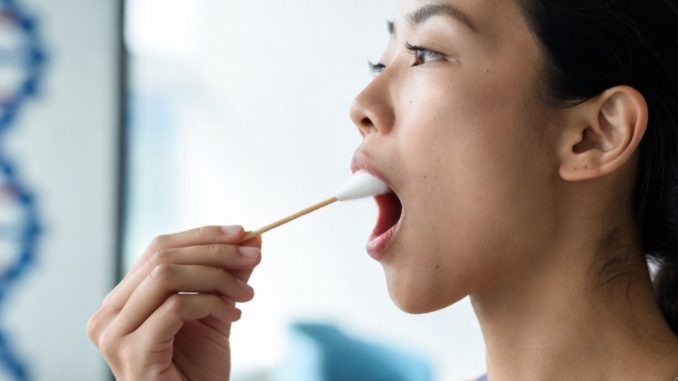
The test itself is elegant in its simplicity. The SRY gene (on the Y chromosome) is the “master switch” that triggers male development. No SRY gene, no male puberty. Most female athletes will sail through the screen and never think about it again. Those who flag positive will be assessed for the handful of rare congenital conditions where the gene is present but the anabolic effects of testosterone never materialised. Those athletes remain eligible. Everyone else with an SRY-positive result does not belong in the female category.
Chromosome-based sex testing in women’s sport is not new, and earlier versions earned a bad reputation for good reason. From the 1968 Olympics onward, the IOC and other bodies required athletes to undergo buccal-smear Barr-body tests to confirm two X chromosomes. By the early 1990s they had switched to PCR testing for the SRY gene itself. These screens were widely criticised as degrading and scientifically blunt. They publicly outed and disqualified women with certain differences of sex development — most notably those with complete androgen insensitivity syndrome (CAIS) — who had XY chromosomes yet developed as female and received none of the performance advantages of male puberty. The case of Spanish hurdler María José Martínez-Patiño became emblematic: her results were leaked to the press, she was stripped of titles and funding, and suffered lasting personal harm before being reinstated. The backlash from athletes, doctors and ethicists was fierce; the IOC eventually dropped blanket genetic testing in 1999.
The new policy is designed to avoid repeating those errors. It still uses the SRY gene as an efficient one-time screen — because the gene is the master switch that triggers male puberty and correlates almost perfectly with the physical advantages we actually care about — but it does not treat a positive result as an automatic disqualification. Positive screens trigger further clinical assessment to determine whether male puberty ever occurred and conferred an irreversible edge. This makes the test targeted rather than crude, focused on fairness and safety rather than chromosomal purity.
Importantly, these tests do not exclude anyone from competition itself. The same rules apply equally to every athlete: if you are excelling at your sport in your sex class — the one that reflects whether or not you went through male puberty — then you can compete. No one is barred from sport; they are simply required to compete in the category that preserves fairness.
This also addresses safety in combat and contact sports. When a male-bodied athlete competes against females, the risk is not theoretical.
Critics will, of course, fret that this will expose “terrible truths” about some adult female athletes. That is vanishingly unlikely. Any relevant disorder of sex development severe enough to affect puberty would almost certainly have shown up long before an athlete reached elite level – lack of menarche, absent breast development, unusual growth patterns. These things do not remain hidden until the Olympics.
The policy is also minimally invasive: one test, once in a career. Compare that with the invasive physical inspections or repeated blood tests of the past. And it is explicitly not retroactive; it looks forward, not backward.
What we are seeing here is the IOC quietly stepping away from the culture war and getting back to the job of sport. It has refused to engage with the ideological identity questions (“What is a woman?”, “Are males who identify as trans actually women?”). Leave those identity politics ideas in gender studies seminars. Sport needs a practical answer to a practical problem: how do we keep the female category female in the only way that matters – by excluding those who have had the irreversible performance boost of male puberty.
This is not bigotry. It is biology. It is fairness and safety for the half of the population that would otherwise be pushed off the podium. And it is long overdue.
The IOC has, for once, chosen evidence over activism. That deserves applause, not outrage.
Hilton EN, Lundberg TR. Transgender Women in the Female Category of Sport: Perspectives on Testosterone Suppression and Performance Advantage. Sports Med. 2021 Feb;51(2):199-214. doi: 10.1007/s40279-020-01389-3. Erratum in: Sports Med. 2021 Oct;51(10):2235. doi: 10.1007/s40279-021-01480-3. PMID: 33289906; PMCID: PMC7846503.
Tucker, R., Hilton, E., McGawley, K., Pollock, N., Millet, G., Sandbakk, Ø., Howatson, G., Brown, G., Carlson, L., Chen, M., Heron, N., Kirk, C., Murphy, M., Pringle, J., Richardson, A., Santos-Concejero, J., Christiansen, A., Jones, C., Alonso, J.-M., Robinson, R., Jones, N., Wilson, M., Parker, M., Chintoh, A., Hunter, S., Senefeld, J., O’Connor, M., Joyner, M., Carneiro, E., Devine, C., Pike, J. and Lundberg, T. (2024), Fair and Safe Eligibility Criteria for Women’s Sport. Scand J Med Sci Sports, 34: e14715. https://doi.org/10.1111/sms.14715
Leave a Reply