
Homeopaths are feeling under threat at the moment and are scrambling around wondering what to do about it. I think there are a number of things they could do: most importantly, they should better manage their own business by showing that they respect the boundaries of what they can reasonably assume is good practice, e.g. stop the dangerous nonsense of believing that they can do anything about dangerous conditions such as malaria and AIDS; they can be much more complementary and less alternative.
But there is something else that they can do too: start showing a desire to develop a base of data that can be relied upon, and respected, to support their methods. The focus to-date has been on clinical trials. Doubters say that trials show no evidence of efficacy. Supporters point to many positive trials. But it has been well documented that the many positive trials are most often poorly designed and reported, and are at best ambiguous in their results. There is not a compelling evidence base for homeopathy. If there was, there would be no argument.
So, let’s take a step back. What sort of evidence would be required to convince me that there might be something in it? Fundamentally, my problem with homeopathy is its total implausibility – it contradicts what we know about the behaviour of matter. How can a plain sugar pill have any significant therapeutic effect on health? So, why not test the basic plausibility of homeopathy – can homeopathy pills do more than sugar pills in predictable way? There are a number of discussions about this going on in bloggerland and I would like to pick up on these and set a challenge…
Here is a rough outline of the sort of test I would like to see done…
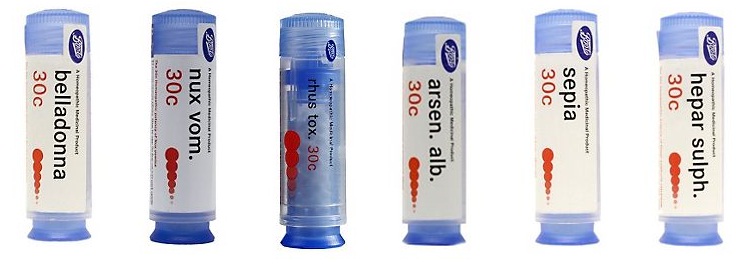
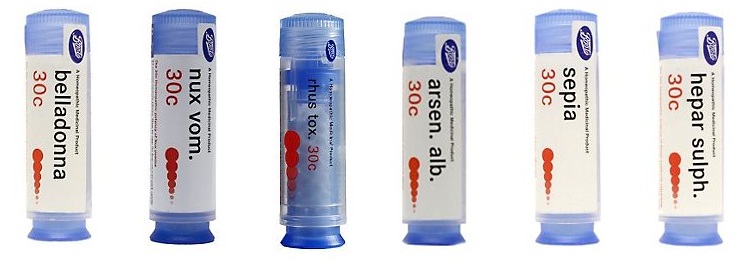
- A trained homeopath selects six homeopathic remedies of any type and strength.
- The remedies are posted to an independent third party who removes the labels and replaces them with a code letter, A, B, C…F, and posts them back.
- The homeopath takes each remedy in turn and notes the ‘totality of symptoms’.
- The homeopath writes down which remedy corresponds to which code letter.
- The third party ‘breaks the code’ and we note how many are right.
Pretty simple stuff. If the homeopath got all six right, then the odds of that being a fluke would be 1:720. (six factorial). This is far more significant than the typical outcome of a clinical trial, where the odds of a fluke result are more like 1 in 20. It would be pretty compelling if done fairly and a good start to building some real evidence.Now, admittedly, this is not a full trial of homeopathy. It does not test the ‘like-cures-like’ part of homeopathic ‘theory’ and so does not demonstrate that homeopathy can be used to treat illness. But it does somewhat get over the hurdle of total implausibility. What this trial is testing is similar to what is going on in homeopathic provings – the supposedly predictable effects of a remedy on a healthy individual.
Would a trial like this convince me? Well, no single scientific experiment should convince anyone of anything. (There is always the possibility of experimental error or fraud in any experiment.) But a test like this would certainly get my attention. Rarely do experiments start with a ‘big bang’ and all encompassing approach. Most often, preliminary tests are done, ‘proof of concept’ runs and so on. If this worked , then it could easily be replicated by other homeopaths. Larger versions done and properly written up for a journal. More stringent statistical tests could be set. Then, I think all sceptics would have to admit that the principle of homeopathic potentized remedies has merit.
This test is not totally fool proof. I could think of a few ways of cheating; some more devious than others. Do we think the odds of a homeopath cheating be more or less than 720:1? Nonetheless, I think it is a simple and good start that could be done with almost no money and would get the ball rolling. More rigorous tests along the same lines could take place afterwards. Conversely, should the test fail, then homeopaths would have a lot of explaining to do.The great thing about this test is that it could be done with very little money. The actual costs would be a few pounds for some remedies and postage, and some volunteers’ time. I doubt it would cost for than £50-60 (About $100). No need for the millions that ‘Big Pharma’ has. And, unlike a clinical trial, there are very few ethical issues – at least, no greater ethical issues than a homeopathic proving. This test is well within the means of a small group of homeopaths who wanted to show the world that they were not deluded. Homeopaths want to be taken seriously. Here is a good start. It’s the $100 Challenge – that is all it would cost.
What is surprising to me is that I can find no instance of a test like this being done before. I would have thought that this was pretty fundamental – can homeopaths determine the effects of a remedy under blinded conditions? One would have thought that this would have been a staple experiment done at homeopathy school. If any homeopaths can enlighten me as to why this has never been done, then please tell me.
So – the challenge: do any homeopaths want to give this a go? All I would ask is that you do this in the true spirit of enquiry and are open and honest about this. What I mean is that if you want to try this challenge, please follow a few simple guidelines:
- Tell the world in advance that you are going to do this. Post your intention on a blog or web site, tell the world what you are going to do, be open to suggestions about how to simplify and make it a fair test. The more detail you publish, the more trust you will have. Remember, sceptics have a problem with trust of homeopaths.
- State in advance what you think would be a successful result and any caveats you may have. Think of ways in which the trial may go wrong in advance, and make efforts to minimise those risks. None of us want excuses afterwards if it does not go well.
- Find a genuine independent third party – someone with no stake in the outcome. Publish who they are and ensure they are happy to field questions from people after the trial. (People will want to know that protocol was followed).
- Publish your results on the web before the code is broken to reveal how well you have done.
Feel free to jig around with the form of the trial. Add extra homeopaths or remedies if you like. Pick whatever remedies you think will maximise your chances of success. As long as the central rule of running the trial totally blinded (only the third party knows the code) then most variants ought to be fair. But publish what you intend to do so that others can judge the fairness of the test. Be open to comments and suggestions about how to make it a fair test. The most important thing you can do, if you want to impress the sceptics, is to convince people the test was properly blinded – that is, there was no way that the testers could know or guess which remedy they were taking.I think such a trial could be conducted in a week or two. The hardest part may be finding a third party. For the record, I am willing to act as that party. The sceptics will trust me – but the problem is that I suspect the homeopaths may think I will cheat and expose the remedies to moth balls or some other spoiler. I would suggest you could use a local newspaper editor, a GP (you do work with them and trust them, don’t you?), a priest or local politician. Basically, someone with no interest in the result and a reputation to lose if they cheated.
I see no reason why a trial like this could not be done. Instead of lots of homeopathic whining about how the sceptics are picking on them, this trial would be a big step forward in proving your case. I can see many homeopaths taking the line, “Why should I do this? I see proof in my practice every day”. If that voice is you, then rest assured the critics of homeopathy will not go away, because there is every reason to believe you are been fooled by the placebo effect, regression to the mean, and wishful thinking. They will see you as dangerously deluded.
May I volunteer to assist with this trial? I am prepared to act as:
– subject of the homeopathic medecines (provided it desn’t affect my work)
– person swapping the labels
– unbiased observer of any of the above.
https://m.youtube.com/watch?time_continue=165&v=TT-sHq8ZJNo
The Boggs boson super Collider could yield needed proof dealing with super micro particles.
LOL! But proof of what, precisely?
Thanks BobP. I think homeopaths ought to be the ones taking the medicine. It gives the test the best chance of success because they would undoubtedly claim to be be more ‘in tune’ to the remedies and able to spot all their ‘subtle effects’.
only a nerd will come to your challenge. It is an ill conceived and totally useless experiment. None of the Homeopath themselves claim that they can detect medicine this way. so whose claims are you challenging ? They claim that they can cure real patients using Homeo medicines. so send them patients to let them prove. and why send any patients , when already thousands and millions patients already visit them and get relief. But they are ridiculed by few as chance healing or natural healing. What an explanation that applies only when one gets cured with Homeopathy.
This is not true. Homeopaths claim that their remedies produce consistent symptoms pictures in healthy people. it is the fundamental basis of the ‘proving’ technique. If this is false, then homeopathy collapses.
If it is true, then my test should be easy. Do remedies produce distinctive, consistent symptoms or not?
You obviously have not even done basic research into the philosophy of homeopathic medicine. A diluted ‘remedy’ will not produce a totality of symptoms which would be discernible to the homeopath, the full undiluted sample of the substance which the remedy is made of will give the symptoms in a well person that the diluted remedy treats in a person who is unwell with symptoms matching the picture in the proving. You are asking why no homeopaths will take your ‘challenge’ and you need to examine your experiment and provide an opportunity for homeopaths to show their abilities in a true test
Fiona
Not true. Hahnemann recommended using substances diluted to 30C in order to do provings. He believed that such dilutions still provide provinsg symptoms and so do man y homeopaths today who do their provings at 30C.
Are you a homeopath?
“full undiluted” Arsenic?
Your homeopathic pharmacy class must be quite a bit smaller on the second day.
‘Provings’ do not produce a “totality of symptoms”. Who told you it did? Not only your design of the experiment is deeply flawed and based on ignorance, but even your calculation of odds is wrong. Further, if you really and honestly were interested in showing homeopathic remedies have any effect you would FIRST start with a simple double blind study involving identifying the homeopathic remedies from a set of unlabelled bottles from those that are not –I do it all the time as I am immunodeficient and suffer with autoimmune, and nosodes and sarcodes are my remedies. You need to ensure the remedies are relevant to the person’s state otherwise the remedy would not have an effect on the person.
And btw, I don’t have a homeopath and don’;t buy my remedies. I treat myself and make my own remedies, hundreds of them, on a machine. They are extremely effective.
So, Sal. Provings do not result in a big list of the symptoms people observed?
Can you let me know what you believe the odds are then?
I am asking homeopaths to tell me how they would differentiate the remedies. All I get so far is excuses.
If you think you can differentiate remedies then feel free to take on the challenge. Tell six remedies apart – blinded. That is all you have to do.
Do you believe a box you buy on the internet with some flashing lights can make medicines for you?
Why not extend an olive branch to the SoH and ask them to formally participate? You could even ask Ben Goldacre to get involved and make him promise to publish the results in his column. I’m sure the SoH and other organisations would love to make him look less smug.
I am sure that if the homeopaths do this openly and honestly it will make big news. The stupidest thing they could do would be to try to do this in private. It would convince no-one and not move the argument forward.
The result of such a test, whether positive or negative, is important for all sides. If it passes then we are on the brink of the biggest breakthrough in homeopathy and medicine for two centuries. If it fails then that tells us important things too. I just cannot think why homeopaths would not want to show us this test tomorrow?
“I just cannot think why homeopaths would not want to show us this test tomorrow”
I can…..
I second what gimpy said. I’d like to know what the SOH has to say, as well as Ben Goldacre, and the doctors who have been campaigning against homeopathy in Britain. As I’ve said on my blog, I’m not a researcher and this would be a large undertaking. (I’d be happy to take part, though.) I wouldn’t want to do it half-way because then the results would just be dismissed, by either side. But if enough skeptics agree to publicly say, “Maybe we were wrong about homeopathy,” we’ll find someone to do the experiment.
I still don’t understand why this particular test seems so much more exciting to you that other tests, but I think I came up with the idea, spurred on by Bata Kali, so I’ll support it as best I can on my side if you’ll do the same on yours.
Woo Woo Science,
Good to see you here. First off, us sceptics are not an organised bunch of people so getting all of them to agree to your request will be hard. That is the very nature of scepticism. What I can say is that I will be very impressed with a result if 6 out of 6 get it right. I am highly confident that others will be too, and it will set the web alight if done well. That should be prize in itself. There will be criticism – that is the nature of science. As I say, this experiment would be the first step in proving a genuine effect with homeopathy. Do you want to make the first step?
Secondly, you say this is a large undertaking. No it is not. It will cost a few quid and take a few weeks as far as I can see.
Thirdly, it will impress me more than clinical studies because it will be open to less ambiguity. If you get 6 out of 6 right, there are three possibilities:
1) Homeopathy has a genuine effect
2) It was a 1 in 720 fluke
3) Fraud or carelessness in blinding was taking pace.
If another group of homeopaths replicates the work, then we can get more confidence in 1 and less in 2 and 3. That is how science works. And then you win.
This is a beautifully simple idea, I really hope you can make it happen.
If the Homeopathic community cant rustle up someone to do such a cheap and simple test it will be pretty damning.
To reduce quibbles about cost you could always set up a paypal donate button to cover the 50quid or however much money is required to do this test.
For now, I think if the homeopathic community does not want to stump up for six remedies and some postage then that will be telling in its own right.
If they pass this test, then I will undoubteldy want to rope in more people, set up a PayPal donate button, to replicate this. I am sure the sceptic community would be happy to cough up some dosh to help see a definitive test done in partnership with homeopaths.
I’m no fan of homeopathy (it being dangerous and pernicious nonsense, and all that), but I can also see why they won’t be taking up this test.
Their magic water is prescribed supposedly to treat specific conditions – hence the long consultations and careful weighing up of the patient’s needs. In the magical universe, homeopathic remedies are created on the principle of “like cures like” – and your testing homeopath won’t have the conditions that the remedies have been created to treat.
In the world of logic, your test’s a good ‘un. In the world of homeopathic logic, it’s unworkable.
Dudley – I disagree totally. Quoting from the Society of Homeopaths web site:
The ‘proving’, in which the highly diluted substances are tested blind on a group of healthy volunteers who then record the symptoms they experience. Where there is agreement amongst provers, the symptoms are documented in a Repertory.
Inducing symptoms in healthy people is part of the homeopathic methodology for testing remedies. My test looks at whether remedies really do induce symptoms in healthy people, and if so, if this is consistent. If the above statement by SoH is correct, then my test ought to be a walk in the park.
If homeopaths want to do the test in groups to improve their accuracy, that is fine by me.
Ah, fair enough. Consider that objection dealt with. I shall join in the “pointing and laughing at homeopaths who duck the challenge” fun!
To deal with another objection,
Soroush Ebrahimi has been posting on another thread about homeopathic challenges.
http://www.guardian.co.uk/comment/story/0,,2224877,00.html
He wanted to give Ben Goldacre a pill and make him ill. Soroush would say in advance how Ben would be ill and then seal it in an envelope.
I think this test is not a good test for these reasons. I responded,
Firstly, it is too subjective. If Ben claims an earache and you have written headache then you might claim the ear in on the head and thus success. We do not want to argue such points if there is any interpretation involved. Secondly, if you fail, then you might claim that Ben was not reporting his symptoms correctly or even lying. That again would not be acceptable.
My challenge to you and other homeopaths removes such problems. It is a simple test to see if you can do what you claim to be able to do. No sceptics will be involved in the test. There is no way we could subvert it. Only an independent third party will be used to label bottles. You will either pass or fail.
Soroush has responded,
The Quackometer’s offer entails a number of tests together which may confuse the results. This is because the practising homoeopath may or may not select the correct remedy correct. So in effect it is a test of skill as well as the properties of the homoeopathic remedy.
That sounds remarkably like he does not want to take the test because he may get it wrong.
Of course it is a test of skill as well as of the properties of homeopathic remedies. No more a test of skill than your proposed test, but it removes the subjective elements and the risk of sceptical cheating.
In short, my test maximises the chance of success for the homeopath. I do not see why you would not want to demonstrate your powers.
It sounds like a good enough idea to me, providing the person who is labelling the remedies is honest..??! I suppose a way round that would be to have a respected homeopath witness the handling, labelling and postage of the remedies etc. Or perhaps we could use a well respected pharmacy such as Helios in Tunbridge Wells to do this with a sceptic being present. This would ensure the administration and handling of the remedies adhere to the rules that homeopathic remedies should only be handled by the person taking them, as they are sensitive energetically. Under such conditions I would be happy to volunteer in this experiment.
The trial would take much longer than two weeks though.
To those who have no idea what homeopathy is, having not picked up any of the books with documented cases and provings (our way of testing remedies), yet are ignorant enough to say it doesn’t work, to prove six remedies and document the results accurately would take a lot longer than just two weeks!! Homeopathy is not a chemically based medicine, it is energy based. Also the way individual remedies work differ, some are deeper acting and so it may take a few weeks or even months for the full effect to be seen in such remedies.
Perhaps if the remedies selected were for ‘acute’ conditions, ie Arnica being one for shock/trauma, Belladonna being one for high fever etc. These remedies may produce quicker proving results? I cannot say this with conviction, but I would be happier to prove such remedies under the given conditions.
I have taken part in a proving as a student at college and this was the biggest confirmation for me that homeopathy works in ways that cannot be explained by ‘rational’ science. The whole group experienced so many mental/emotional/physical symptoms in common with each other that it could NOT just be pure coincidence. Especially as so many provings have been conducted on thousands of remedies with the same results, a theme or pattern which arises from the specific remedy being proven. To take part in the proving, we all had to record our mental, emotional and physical symptoms as they arose in our own personal notebook as well as report to a supervisor on a regular basis so that our symptoms could also be viewed objectively (a different supervisor to each prover). The proving I took part in even had dream themes which were very similar in some of the provers.
Some sceptics may ponder that provers influence each other if they are in the same group. This is not so, provings of one remedy conducted in one country will have very similar or identical results to provings of the same remedy in another country. Provers are not aware of what they have been given either, until their notebooks have been handed in a couple of months later and the person controlling the study finally tells them what the remedy source is.
Homeopathy and other holistic, alternative and complementary medicines are based on the transmission and curative manipulation of energy to the subtle energy field of the human body-mind; this is what is criticised by many scientists/sceptics as ‘superstitious’, ‘non rational’, ‘placebo’ etc. However I’d like to ask all those sceptics a question. Are you ALL atheists? We cannot prove if God exists after all. If so, perhaps your next mission might be to ban all known religions!
Possibly there are some scientists from the materialist based scientific community who may not be atheists. They may go to a communion service and partake of ‘the body and blood’ of Christ which on a materialist level is nothing but a piece of non leavened bread. However they are happy to have enough faith in their religion to take part in such a ritual (that same wafer of bread had previously been resting on an altar at which a priest or vicar has, assisted by the energy of the congregation, engaged in a ritual service to invoke the energetic spiritual essence of say, Christ). The next day one of those scientists may write a scholarly article denouncing complemantary therapeutic treatment as ‘placebo’ because there is no chemical substance in the treatment.
BTW, I’m not suggesting that you need to believe in God, or a certain religion for homeopathy to work.
‘Placebo’ is the term scientists use when they have chosen to ignore and discredit any of the alternative and complementary therapies; it is also the means for avoiding recognition of the vital energy fields which animate, surround and permeate every cell and organ of our bodies.
We know that we would not be able to survive on this planet without the energy of the sun. I see astronomy as a scaled up version of using a microscope to detect cells in the body. It is accepted that we cannot live without the energy of the sun. Scientists also know that dark matter exists but are unable to explain it due to the limitations of their own ignorance in being able to find a way to explain it (yet). The same could be said for homeopathy, don’t diss it until you actually KNOW what it is!
So bring it on!! I’d be happy to take part in such a trial (providing it was conducted in a fair way, as explained above). The trial to me just seems to be exactly like a proving of six different remedies in consecutive order. But if you are that ignorant of the facts staring you in the face, ie the many provings that have already been conducted, we shall try this approach instead, which is really just a remedy comparison!
Sarak K – glad to see you taking this up. Fantastic news.
First of all, let me deal with some of your points. I hope this can be done quite quickly. I am not asking for you to provide a complete remedy picture (as this could take months). Rather you just need to pick remedies where you could reliably differentiate them from each other. Choose remediies with vastly different profiles. Major symptoms etc. Pick a high potency remedy and this could occur quite quickly?
As for the trust thing. I am happy for you to pick a third party to do the labeling. As long as (as I have said) they have no stake in the outcome (so Helios is out) and that I can have an email address or phone number to check (after the test) that protocol was followed and understood. They should also have no possibility of contact with you throughout the test.
As you can see, my involvement will be almost nothing. I will only get involved once you have passed just to verify that it all went to plan. So, it is up to you to pick your remedies, say what you are going to do, pick a third party and get on with it.
I would appreciate a discussion about how you brief the third party so that they properly understand the necessity for blinding and how to check for possible problems with blinding. You can get my email address from the ‘About’ section of this blog if you want to discuss those things.
Good stuff.
PS Don’t let Sarah volunteering stop other homeopaths come forward – the more the merrier! Multiple testers getting this right would be astonishingly good evidence.
Ok, give me some time to think this through, find a third party and a supervisor etc. I shall be in touch once I have come up with a plan. But don’t expect instant results within two weeks!!
Remedy interaction is another problem that arises when trying to prove six remedies in consecutive order. You need to space the provings out a bit to ensure the complete symptom picture isn’t being affected by another remedy which has been administered, especially if it is in a high potency (as you suggested).
I could prove one at a time and you can log the results as and when.
What you are asking is a huge task, so please be kind enough to bear this in mind and don’t expect instant results.
If taking them sequentially is a problem, the feel free to rope in other homeopaths and take then in parallel. Each homeopath can decide which remedy they have taken. Might be hard to agree amongst you, but would still be an impressive demonstration. (Or 3 take 2 pills etc) Feel free to think ways of making this quick, cheap and easy.
The problem with society today is that everyone expects instant results, that is why problems arise from suppressing illnesses such as headaches/migraines with instant painkillers etc. Suppressing a problem doesn’t cure it!
I will not be told to hurry up and get on with it. I have a busy life and will conduct this trial as efficiently and effectively as possible in my own time. I will try to make it one of my priorities though.
Well done Sarah it’s good to see someone is willing to have a go. I’ll be following with interest.
Sarah – I am not trying to rush you – as I hope you can see, I am trying to make this as cheap and undemanding as possible, so that it is easy to take part.
I genuinely do not understand why this should take a huge amount of time. I am rigging the test in the homeopaths favour by saying they can use any remedy they like. Choose easy ones. No subtlety required.
For example, Nelson’s sell a mixture of 6c homeopathic Kali brom, coffea, passiflora, avena saliva, alfalfa and valeriana under the trade name Noctura. I would be happy for something like this to be one of the chosen remedies. Nelson’s customers would naturally expect a response from this in a few hours, not one over several weeks.
Anyway, looking forward to hearing from you.
This will take some time as I said before, because you cannot take six remedies in two weeks without ruling out the possibility that the remedies may interfere with each other’s actions. I’d say you need at least two or three months between each remedy for the results to be clear and fair. Seeing as we are in such a hurry to conduct this trial, I shall try and find other homeopaths who are willing to participate in this, though I can understand why many would not wish to. It is not something we should have to do in order to prove anything to you sceptics.
You can’t understand why it should take so long because you haven’t spent four years training to be a homeopath.
Anyone whose genuinely interested to see the results of properly conducted provings can find these in books such as Dynamic Provings Vols 1, 2 and 3 by Jeremy Sherr. These are written for homeopaths and students of homeopathy but you may be able to get a general idea of what is involved.
Homeopaths are educated as to how conventional medicine works, why not educate yourselves a bit more on homeopathy before asking us to take part in experiments that have been conducted countless times before? The only difference being that we are not required to guess which remedy out of six it is that we’ve taken!
Thanks Sarah. Although you sound remarkably close to saying that homeopathic remedies have unquantifiable long term side-effects. I do though, bow to your superior knowledge of the remedy pictures.
Nonetheless, I might naively think that (say) a homeopathic insomnia remedy would have large short term effects (sleepiness) and only minor long term side-effects. I would hope that six remedies could be chosen with clear and distinct short term signatures and only minor, more subtle long term side effects that would not interfere too much. But I will leave it up to your training to determine what those might be.
I only wish such experiments had been done before. I think you may be a homeopathic first.
I would be interested to know if homeopaths regularly inform their patients that: “you cannot take six remedies in two weeks without ruling out the possibility that the remedies may interfere with each other’s actions. I’d say you need at least two or three months between each remedy for the results to be clear”.
Nathan, there are remedy relationships, ie some work well following on one from another.
When it comes to proving remedies it is a different matter. I don’t have time to educate you lot, it would take up far too much of my valuable time. REad some books before criticising!
I cannot monitor what is being said here 24 hours a day, and I have much work to do now with the task in hand.
“What is surprising to me is that I can find no instance of a test like this being done before. I would have thought that this was pretty fundamental – can homeopaths determine the effects of a remedy under blinded conditions?”
Actually this has been done, so I guess you weren’t looking hard enough.
First, a pilot study involving one remedy vs placebo: A Vickers, R McCarney, P Fisher and R van Haselen. Can homeopaths detect homeopathic medicines? A pilot study for a randomised, double-blind, placebo controlled investigation of the proving hypothesis. Homeopathy (2001) 90.3.126-130 (http://dx.doi.org/10.1054/homp.1999.0475)
Then a full study between 2 remedies and placebo: G Dominici1, P Bellavite, C di Stanislao, P Gulia and G Pitari. Double-blind, placebo-controlled homeopathic pathogenetic trials: Symptom collection and analysis. Homeopathy (2006) 95.3.123–130 (http://dx.doi.org/10.1016/j.homp.2006.04.003)
Well neither test is as simple and straightfoward as mine.I cannot find a similar example to my test. Both these tests involve placebos and more complex measures. More ambiguity.
The first concluded that there was not enough statistical power to confirm an effect (very few responses). The second is calling for further studies to confirm their results.
I hope this is an encouragement for others to come forward.
After thinking about all this, I’ve realised just what an impossible task it is for me to test the remedies by myself. Provings are conducted on GROUPS of people, not just one person (as in most other trials of a medical nature, involving lots of people who are monitored by a professional body). When proving a remedy, it is the collective similar symptoms of the group as a whole which forms the basis of a remedy picture or pattern. If the trial were to be conducted by a professional body such as the Society of Homeopaths or Alliance of Registered Homeopaths on a group of willing students or homeopaths then it may be more plausible. Under such conditions I would be more willing to take part.
I also do not want to waste my time on conducting such a trial for people I don’t even know on a web blog site stating that homeopaths are quacks.
I make my apologies to the homeopathic community for getting drawn into such a stupid idea in the first place. I have only recently graduated this year, and feel I need to focus on the people who do care for homeopathy, not the ones who don’t.
Apologies too for raising the hopes of some of you sceptics, I hope you understand the predicament. I can see why people are sceptical, it’s just because they do not understand how homeopathy works.
Sarah – that is a great shame.
There is an opportunity here to show that I am talking rubbish.
And let’s be plain speaking here. I believe homeopaths are unable to assess their own competence and unable to police the boundaries of their work. This leads them to being unable to assess their own effectiveness and ends up with beliefs such as that dangerous illnesses can be cured with homeopathy (malaria etc). I criticise homeopaths because of this.
If simple tests like this can be done then it shows a willingness to objectively assess competence. I see little evidence that this is taking place.
I do hope that other homeopaths have not disuaded you from taking part. There are many out there who fear the results.
Anyway, good luck and I hope you find a way to take part.
You say: “And let’s be plain speaking here. I believe homeopaths are unable to assess their own competence and unable to police the boundaries of their work. This leads them to being unable to assess their own effectiveness and ends up with beliefs such as that dangerous illnesses can be cured with homeopathy (malaria etc). I criticise homeopaths because of this.”
Just how did you come to this conclusion? There are many many cases to show that homeopathy has cured people with dangerous illnesses. We are trained to assess our cases in a competent way, and competent homeopaths would never put their patients lives at risk. Conventional medicine does have a good role to play when it comes to some serious conditions and I would recommend my patients to go and see their GP if I thought this the case. We do not have the surgical skills to mend a broken arm, however we can help the patient by selecting remedies that will help speed up the healing process; Symphytum is a remedy we use for helping the bone repair itself and this would be given to the patient after their bone has been set with a cast. The results have proven time and again that Symphytum helps speed up the healing process.
I do not believe that homeopathy is the cure all for everything, we are not taught to think like this (unlike doctors of conventional medicine.. the big pharma companies being behind this).
You also state “If simple tests like this can be done then it shows a willingness to objectively assess competence”.
Some of the older remedies have been proven again and the same results have been seen in the remedy pattern that’s resulted from these provings. And as I said yesterday, one remedy may be proven by a group of homeopaths in one country and the same remedy in another. The results are then compared to show that the pattern or theme is very similar or identical.
I think I could be on here forever trying to answer your questions or fill you in on the facts. Unfortunately I cannot do this.. I really must get on with my life!
There is a very useful book called ‘The practical handbook of homeopathy’ by Colin Griffith which I think is moderately priced at £12.99 (you can order this from Helios Pharmacy, they have a website). There are around 360 pages covering why homeopathic remedies are effective, when to prescribe at home and when to seek professional advice – homeopathic or medical, when to combine homeopathy with other remedies or alternative therapies for better results, how to recognise signs and symptoms and how to prevent ailments, how to recognise an emergency and how to handle it etc.
I hope you can find the time to educate yourself a bit more with books such as these, why not even try some remedies? You could surprise yourself!!
Dear Sarah, I believe homeopathy is dangerous because of its refusal to engage with serious allegations that it puts the health and lives of its customers at risk. This was highlighted starkly by the SoH refusal to condemn their own members who were prepared to offer homeopathic malaria prophylaxis. Their subsequent actions looked exactly like a whitewash. This is well documented on this site and others. Instead of engaging with this criticism, the SoH issued legal threats to my web site hosts for me pointing out these simple facts.
Furthermore, I see no evidence that suggest homeopathic remedies have any evidence base behind them. Practicing without an evidence base is the definition of incompetence. Anecdotes are not evidence. Homeopathic proving practices are deeply flawed as is pointed out by academic homeopaths like George Lewith at Southampton University. My test would show whether this is a reasonable criticism.
I find it irritating that so many homeopaths try to tell me to educate myself. I know a lot about homeopathy and enough to see its inherent contradictions and weaknesses. I point these out. I may not know the detailed remedy pictures, but that is irrelevant to make my criticisms. You may well have studied these remedies for years, but if the foundations of homeopathy are rotten then your education has been useless. That is a cold prospect to face, I am sure.
I do not need a degree in unicorn studies to point out that they don’t exist. The little boy who told the Emperor he was wearing no clothes did not have to study invisible textile design at art college for four years to point out the bleedin’ obvious.
I am pointing out the bleedin’ obvious about homeopathy: its evidence base is shabby, it contradicts well established laws of physics, and its practitioners do not appear to care to much about these things, and whose delusions endanger vulnerable people.
If someone wants to humiliate me by passing this simple test then please go ahead. I welcome it and I am confident in the outcome.
I think you must be quackers!! You just can’t stop quacking. Be careful what you say as well, have you got a physics degree? What laws are these you talk about? I wasn’t suggesting you need to know about the remedies themselves, it is the philosophy behind homeopathy you seem to know nothing about.
On the subject of malaria, I myself took a conventional medicine called Larium years ago (which is meant to act prophylactically) and suffered some of the awful side effects which have been documented in tv documentaries. The Campaign for Truth in Medicine highlights many more drugs that are used by conventional medicine which are just as dangerous or more so (see http://www.campaignfortruth.com), yet the media do not make such big news of this. Ask yourself why?
I’ll leave off here, no doubt you will continue quacking with more derogatory comments about homeopathy but I’m not playing this stupid game anymore.
According to this post most homeopaths have seen a 50% drop in their customers
http://dcscience.net/?p=197
Presumably then some of them must have a bit of time on their hands to do this experiment. Just think of the positive publicity they would get as well.
ps Avogrado’s number is no longer a relevant argument against homeopathy.
Homeopathy is in contradiction with the atomic theory of matter. It is a rock solid theory. Quantum theory – now integrated with the atomic theory – does not rescue homeopathy, despite what some pseudo-intellectual homeopaths claim. They either have no idea what they are talking about or are deliberately bamboozling. Most homeopaths do not have the knowledge to make an assessment of this. And yes, I have a doctorate in physics – but that is immaterial.
Avogadros number is at the heart of the problem. You casually state that it is no longer an issue, but I am afraid you are very wrong. If you want to rely on so called memory of water effects, then you are again treading in areas of utter ignorance. No-one has been able to demonstrate a lasting water memory effect. No one can consistently and repeatable show a difference between water and homeopathic dilutions. Those that claim they can have not been able to show that it is not experimental/instrumental noise, contamination or interference – the staple problems of analytical material science. Avogadro still lives.
As for malaria pills – yes drugs do have side effects – get over it – the task is to weight up the risks of catching malaria with the risks of experiencing a side effect. When side effects do show in some people, they can be managed by changing regimes. But larium has been shown to prevent malaria – it has a benefit. No homeopathic remedy has ever been proven to provide a benefit in similar trials. And problems with real drugs in no way get homeopaths off the hook of these criticisms – you are trying to deflect argument.
It looks like your homeopathic teachers have taught you well, Sarah!
Does any homeopath want to provide me with a metaphorical punch in the face by passing my test?
To quote: ‘Sure it’s going to kill a lot of people, but they may be dying of something else anyway’ – Othal Brand, Texas Pesticide review board, on chlordane.
That seems like quite a big side effect to me!
We have now gone back to discussing that homeopathy doesn’t work because it cannot be physically proven. Yes, if that’s so, why do conventional medicines have one up on homeopathy because they are able to prove their chemical substance? If you have bothered looking at the website for the campaign for truth in medicine (www.campaignfortruth.com) you will find alarming statistics of deaths caused by conventional medicine.
You say ‘Practicing without an evidence base is the definition of incompetence’. I wouldn’t agree with you there, when you can see what conventional medicine is capable of doing, even with an evidence base!
Quack on!
Plausibility is absolutely a big issue. Without plausibility, it is far easier to believe that homeopathic effects are essentially delusions. No need to re-invent the laws of physics to believe that. It’s Occam’s Razor. People are easily deluded.
And, The tired old falacious ‘allopathic iatrogenic harm’ argument is not an argument in favour of homeopathy. Homeopathy has to stand on its own two feet. Is Homeopathy true or is it not?
http://www.quackometer.net/blog/2007/07/quack-word-20-iatrogenic.html
Are there any homeopaths out there wishing to prove what they are doing is not utter nitwittery?
“The first concluded that there was not enough statistical power to confirm an effect (very few responses).”
Errr hello … pilot study …
“The second is calling for further studies to confirm their results.”
Well of course it is. That’s a prudent conclusion where any trial produces good results that haven’t yet been replicated.
This is a trial where two groups of provers totaling 21 people tested 2 remedies simultaneously and where each group of provers were also randomised 30% to placebo.
Quoting the results and conclusions from the study:
__________________________
Results
The principal results were:
• Placebo reported less symptoms than verum groups.
• Symptom distribution according to predefined classes (common symptoms increased in intensity and/or duration-, cured, old, new and exceptional) was statistically different between placebo and verum group at a high level of significance (P<0.001). Compared to verum, placebo provers reported less new and old but more common (increased in duration or intensity) symptoms.
• Within repertory categories, other differences were detected.
• The two groups differ in terms of the duration of each symptom and kinetics of symptoms: most symptoms were more persistent in verum than in placebo groups and verum provers recorded a decreasing number of symptoms with time. Placebo provers did not show such a temporal pattern.
Conclusions
If confirmed by other studies these results would demonstrate the non-equivalence between homeopathic medicines in high dilution and placebo and contribute to the improvement of proving methodology and evaluation.
__________________________
But there’s something I’m having some difficulty understanding here. I hope you can enlighten me. Instead of taking this study seriously, you’re proposing a challenge to a handful of homeopaths to identify 6 remedies. No requirement for a control group. No requirement for replicability. Smaller numbers than the study quoted above appear to be acceptable to you. And your challenge seems to be supported by a large number of other “sceptics”, most of whom have stated they would find such an experiment convincing.
Yet — and this is the bit I’m struggling to get my head around — every time someone cites a study with positive results for homeopathy the chorus chimes in with “no control”, “inadequate randomisation”, “no replicability demonstrated”, “too small a study”. Is there some subtlety in your trial design I’m missing here, or are you all just a bunch of hypocrites?
aughingmysocksoff: first – yes pilot study and unreplicated study. Could well be a nasty case of publication bias here – why no follow up study, why no replications? Suspicious.
Anyway, you ask some more interesting questions: No requirement for a control group. No requirement for replicability. Smaller numbers than the study quoted above appear to be acceptable to you. And your challenge seems to be supported by a large number of other “sceptics”, most of whom have stated they would find such an experiment convincing. … Is there some subtlety in your trial design I’m missing here, or are you all just a bunch of hypocrites?
Yes, you are missing something and it is not even subtle. First, replication will be important as I say in the original challenge. One homeopath getting this right will be intriguing evidence. Several independent homeopaths getting it right will be a devastating slap in the chops for us sceptics. We just don’t believe anyone could do this. Homeopathic pills are inert and have no effect on people.
As for a control group: these are required in clinical trails because you do not know what the ‘baseline’ is. You do not know how many people get well on their own without intervention; you do not know how powerful the placebo effect might be; you do not know what other reporting biases there might be. So you have a control group, taking a placebo, to establish that baseline. The problem is that you need lots of people to establish a statistically meaningful baseline. Hence, small clinical trials are usually rubbish.
This is not a clinical trial. This is a simple test to see if homeopaths can do what they claim to do. We know the baseline – we would expect the homeopath to get 0, 1 or 2 just by random chance – 3 if they are really lucky. 6 would be extremely impressive and warrant replications. it would – well – blow my socks off.
Let me give you an analogy: let’s say you claimed to be an expert in recognising British birds – and I doubted you. I could ask you to select six photos of birds, any you liked, make it as easy as possible for you, blackbird, robin etc. I am not asking you to differentiate chiffchaffs and willow warblers – yet. Now, someone else takes the photos and runs a black marker pen over the captions and replaces them with the letters A to F. Can you tell which bird is which without reading the labels? There is no need for a control group here. No need for fake bird pictures to get a baseline. Just – can you do what you say you can do? If you pass then we might want to replicate it with harder birds. If you fail then you have no credibility to claim to be an ‘expert’ in recognising birds.
I hope my test is a easy as this for you to pass.
“Could well be a nasty case of publication bias here – why no follow up study, why no replications? Suspicious.”
Why should it be suspicious that there’s no replication for a study which was published only last year?! Trials regularly take a year to get published. And I imagine folk at the RLHH are far too busy fighting for the hospitals’ survival to be spending much time doing trials these days.
How about addressing the trial itself? Here’s 21 people able to demonstrate the differences between 2 verum remedies and placebo. How is that any less impressive than what you’re proposing? If “publication bias” is the best you can do, it’s a pretty lame excuse.
“And I imagine folk at the RLHH are far too busy fighting for the hospitals’ survival to be spending much time doing trials these days.”
Uum I think the best way they could ensure their survival would be to do some methodologically sound trials.
I’m not sure the RLHH study cited by laughingmysocksoff is as encouraging as he thinks. It says “Seventy homeopaths were randomised of whom 50 completed the trial. In the main analysis 60% correctly identified the bottle containing Bryonia”. So 60% of 50 people got it right. When you do the maths, if 50 people guess and each has a 50/50 chance of being right, there is a 10.1% chance of 30 or more people being correct (as seen in the study). But there is an 11.2% chance of exactly 25 people guessing correctly. So there was almost exactly the same chance, by pure luck and guesswork, of observing the result seen in the study as observing exactly 50% of people getting it right – a result that would presumably be ascribed to blind luck.
To sum up, does that mean there’s only a 10.1% chance of more than half the people guessing correctly? and only 11.2% chance of half the people getting it right?
An 11.2% chance of exactly half the people getting it right, and a 10.1% chance of 30 or more people getting it right. That’s for 50 people each making one pure 50/50 guess.
“I’m not sure the RLHH study cited by laughingmysocksoff is as encouraging as he thinks.”
If you’re referring to the one I was just talking about, that isn’t the one I was just talking about. The RLHH study was a pilot, vaguely promising, but not as interesting as the Italian study.
laughingmysocksoff – if you think that study means that 21 people could tell the difference between homeopathic remedies and water then you are seriously misinterpreting the results. A minor discrepancy in blinding or randomisation could account for such a result. I must defer to the wisdom of the authors of the paper and await independent confirmation with a statistically significant trial before getting too excited.
My test avoids a lot of the problems with such a trial. It tests directly the claims of homeopaths about the power of their pills. Anyone up for it?
Without wishing to put the dampners on things, much bigger trials (n = 253), have been done to show placebo controlled provings do not work,
e.g.
http://www.blackwell-synergy.com/links/doi/10.1046%2Fj.1365-2125.2003.01900.x
Conclusion: No significant group differences in proving rates were observed [Belladonna provers N = 14 (13.9%); placebo provers N = 15 (14.3%); mean difference − 0.4%, 95% confidence interval − 9.3, 10.1] based on intention to treat analysis. Primary outcome was not affected by seasonality or the individual’s attitude to complementary medicine.
Conclusion Ultramolecular homeopathy had no observable clinical effects.
This trial was done by a well known set of academic homeopaths.
I hope you don’t mind but I politely emailed the SoH to alert them to your challenge and suggested maybe they could find one of their members to take part.
Strangely there has been no reply.
what’s your conclusion if they don’t reply.. can you weigh this up mathematically?
I like such a simple idea, in fact I was just thinking that I’d be happy to drink a 30C dilution of my own urine, or anyone else’s.
Actually, any poison you can name and dissolve, I’d be happy to drink it at 30C. Succuss it all you like, or don’t, either way I’m game.
oh dear, looks like there’s some poisonous people on here, with poisonous remarks. Please do feel free to swallow your own urine or cr*p.
One Anon said “Actually, any poison you can name and dissolve, I’d be happy to drink it at 30C. Succuss it all you like, or don’t, either way I’m game.”
Another Anon replied: “oh dear, looks like there’s some poisonous people on here, with poisonous remarks. Please do feel free to swallow your own urine or cr*p.”
Actually, Another Anon, this shows that you do not understand what “30C” means. If someone created a homeopathy 30C dilution of urine or anything else, there would be very little chance of there being anything but water (or alcohol depending on what the solvent is).
You see a 30C dilution is 1 part to 10^60 (that is a “1” followed by 60 zeros). That is a dilution that is physically impossible. First with knowledge of how chemistry works, and simple knowledge how algebra works with Avogadro’s Number works, PLUS knowing that even getting a solvent that pure is even impossible… you will understand the point of the “Simple Challenge>”
Paracelsus (born 1493)is acknowledged as the ‘Father of Chemistry’ by conventional science (he also introduced many drugs and noted the hereditary pattern of syphilis amongst other contributions). He recognised the importance of elimination of toxins from within the body and the harmful consequences from their accumulation within the human system. He realised that obstacles to the flow of the vital forces of the body resulted in toxicity and the death of living tissue. One of his basis for the five causes for disease is as follows:
Subtle influences acting upon the energy fields surrounding everyone, set in motion rates of vibration which permeate the physical body causing imbalance or biochemical conflict. These influences are due to the cumulative effect of solar and cosmic forces and rays operating upon the etheric or magnetic field surrounding the earth. These fields are invisible atmospheres which affect all creatures and life living within and depending upon them for their survival.
Science has since acknowledged it’s not possible for a ‘vacuum’ to exist: ‘the field is everywhere’. There may be no air separating the sun and planets of the solar system. It has become accepted that seemingly empty space is filled with fields and energies not directly detectable to the five senses which include interacting gravitational fields, magnetic fields, electromagnetic fields, solar wind, high energy sub atomic radiation, human produced electromagnetic frequencies, and other unmeasurable subtle energies.
Writing in the early 16th century, Paracelsus declared that many diseases originate in psychological causes, and that all intemperances of the mind and emotions lead not only to the immediate discomfort of the body, but by corrupting a person’s psychic nature, cause some of the illnesses most difficult to diagnose and treat. He was the first to write that violent emotion may cause miscarriage, apoplexy (stroke), spasms and result in the malformation of the foetus of an unborn child; that anger can cause jaundice; and grief so depress a vital bodily function that death is the result.
He also noted that spiritual causes can result in serious illness. By disregard of conscience and that which the person knows to be right, spiritual confusion results with a loss of inner direction and appropriate self control in the balance of personal conduct in daily life.
Paracelsus is as relevant today as he was five hundred years ago. His model of the energetic relationship of matter, energy, and the vital force is fully consistent with the latest ideas, thoughts and models of ‘new’ and quantum physics.
Homeopathic remedies are unmeasurable subtle energies we use to treat people to good effect.
Good Work , ckr
All well and goog, ckr. But it is total bollocks. Would you like to put your money where your mouth is an prove even the slightest part of what you believe?
We are waiting for one brave homeopath who really believes that inert sugar pills can create reproducable, distinct symptoms in healthy people. I think you are deluded.
only a nerd will come to your challenge. It is an ill conceived and totally useless experiment. None of the Homeopath themselves claim that they can detect medicine this way. so whose claims are you challenging ? They claim that they can cure real medicines using Homeo medicines. so send them patients to let them prove. and why send any patients , when already thousands and millions patients already visit them and get relief. But they are ridiculed by few as chance healing or natural healing. What an explanation that applies only when one gets cured with Homeopathy.
Please read the above line of “They claim that they can cure real medicines using Homeo medicines. ”
as
” They claim that they can cure real PATIENTS using Homeo medicines. “
No need for bad language on here.. negative attitudes and emotions could give you indigestion, you better get some Rennies eh?
Well people like ckr who post irrelevent rubbish that does not address the central question of this post deserve some straight talking.
I am beginning to think that is all we will ever get from homeopaths – nonsense, deflection, excuses, non sequiturs, whining, daftness and general avoidance of the issue – their claims are without merit and they should not be in a position of responsibility with patients because they are not aware of that fact.
“I am beginning to think that is all we will ever get from homeopaths – nonsense, deflection, excuses, non sequiturs, whining, daftness and general avoidance of the issue – their claims are without merit and they should not be in a position of responsibility with patients because they are not aware of that fact.”
If they’re really unaware that their claims are without merit, why the evasions?
Homeopaths’ claims are not without merit, that is why it is the second most widely used system of medicine in the world, with chinese medicine being first.
After reading all that’s been said in this blogsite, can you STILL not see why any homeopath would want to take part in such a trial? Hasn’t it been said that remedies need proving on GROUPS of people, not just one individual? How would you like to do a test on say 6 different painkillers and then tell us which one is which? That’s about as fair as what you’re asking of homeopaths, under such conditions.
Anonymous,
Wrong, wrong and wrong.
First off, the painkillers comparison is not helpful. The manufacturers of painkillers do not claim that their drugs can induce reproducable and dictinct symptom patterns in healthy people and so testing for this would be silly.
However, Homeopaths do make such a claim. The principle of ‘provings’ depends on it. Now, I am not asking you to look for subtle effects – I am happy for homeopaths to pick the most striking remedies they can. I amhappy to make it easy for them. Several homeopaths have told me that if I take one remedy it will have huge and predictable effects on me. I am simply asking homeopaths to demonstrate that in a convincing way.
Secondly, if a small group of homeopaths want to do this together, swap notes, look for common symptoms, then I am very happy. In fact, I am quite happy for them to do what they like as long as they are blinded.
This is just a simple test of the basic claims of homeopaths.
Everyone has different susceptibilities. These are shown in the symptoms that arise from a proving, and this is why it isn’t possible to gather enough adequate information from just one person conducting a proving. It is the overall similar symptoms of the group as a whole which forms a remedy pattern/picture.
When someone takes a remedy, they are usually given the simillimum, in other words, the remedy that matches that person’s symptoms most.
The ‘huge and predictable effects’ will be that these symptoms are removed from the person with the remedy working as a simillimum (like curing like). This is partly how homeopathy works, it is the very basics.
If a homeopath told you you could ‘prove’ a remedy by yourself then they obviously hadn’t given it much thought before making this claim. An easy enough mistake to make, as some of these homeopaths may have had solid enough subjective proof themselves by taking part in a proving that may have had a huge effect on them as individuals. However, their experience may be totally different to yours in such a proving, which is one reason why groups are used instead of individuals.
EG There may or may not be a strong likelihood that you would come out in some symptoms such as digestive upsets, bad temper etc for a remedy such as Nux Vomica. If you did come out in these symptoms, it is because you have an underlying susceptibility to such symptoms and the remedy is bringing these to the surface in order to release them from your system. We cannot say who is susceptible to what without taking the remedies, or what the remedy’s susceptibilities are in conducting a proving on just one person.
The provings have already taken place thousands of times, which is probably why the SoH do not wish to get involved in such a petty dispute. Also several links have been posted on this site showing relevant enough results. It has got heated to the extent that people are now swearing, which isn’t going to clarify anything. I can’t see how much clearer the point can be made to people such as yourself though.
Oops, sorry but I came up as anonymous. I’m quite willing to make myself known as the piss-drinking volunteer, after all, I drink piss almost every day.
HJ
There’s a shallow pun in there, but the offer is serious.
After reading all that’s been said in this blogsite, can you STILL not see why any homeopath would want to take part in such a trial?
Anon, I suspect that English is not your first language, that’s why I’m not making fun of the quote above.
That sounds like wriggling to me. And you cannot prove anything you say. Homeopathic ‘Provings’ are not done in a properly blinded manner. They are almost undoubtedly exercises in ‘confirmation bias’. Your own academic hoemopaths agree with me – people like lewith.
As I have said, more than one homeopath can work together on this. it would be an ideal project for a group of homeopathy students to do.
By doing this experiment we were learn something:
1) If the homeopaths pass – I will crawl back under my rock, ashamed.
2) If the homeopaths fail then you will have objective evidence to back-up your above claims and show your more assertive colleagues that they are talking rubbish.
But if you fail to take part, then all that says to me is that are totally uninterested in finding the truth, you show absolutely no curiosity about the basics of your practice and, so we should not be trusting any of your healing claims because you haven’t got the guts to test them and they are undoubtedly just healing delusions.
Rubbish.
Rubbish?
I think another telling aspect of this challenge so far is that no homeopath has really proposed a way to improve the test to increase the chance of showing a positive result. Instead, excuses are found to not test. I have said clearly that the options is open for to you to alter the test to maximise your chance of success in pretty much any way. I could not be fairer than that or expose myself more to the chance of ridicule if you succeed. All I really am asking for is some openness, some proper blinding and adequate statistical significance.
This lack of engagement, even in trail design, says to me that homeopaths do not wanted to be tested – and we have to ask ourselves why.
Homeopaths have a simple choice: they can either start doing fair, cheap and simple tests like this one, or they can continue to face a barrage of criticism. You have the opportunity to laugh in the faces of us sceptics, to demonstrate to future customers you powers and prevent damaging attacks. I just do not see why you would not do this.
The unwillingness to test their beliefs suggests to me that deep down they know it doesn’t work.
Oh aye, and the SoH didn’t even reply to my polite email. A simple “fuck off” would have sufficed.
I would not expect anything else from the SoH.
The Society of Homeopaths is a business run by a non-homeopathic business woman with the aim of taking membership subscriptions off homeopaths and in return, giving them the faux credibility of an organisation that looks like a regulator. There is no way they would threaten their business model by subjecting their members’ beliefs to objective tests that could undermine their very existence.
The SoH are the wrong organisation to ask, I’m afraid. There are other organisations we should be publicly challenging – and I fully intend to in the New Year, if we get no takers.
How about those quantum based machines designed by NASA, which are able to detect mineral deficiencies and illness etc. They have been used in combination with homeopathy to make an evaluation of what remedy is needed. Could they somehow be used to see what remedy a person is proving?
How about this for scary – using blood from someone with AIDS as a homeopathic therapy:
http://www.hominf.org/aids/aidsfr.htm
I found that while I was looking for references to ‘proving’. I think I may have unfortunately found a flaw in your otherwise brilliant test, which is that ‘provings’ are done using the concentrated substance, not the diluted/succussed one. I bet I could correctly work out the symptoms caused by arsenic, but I don’t really want to get multi-system organ failure.
“The process of proving has been credited to the founder of homoeopathy, Samuel Hahnemann. The popular history of Hahnemann’s first proving begins with his discovery of the poisoning effects of Cinchona bark. Hahnemann was struck by the similarity between the symptoms of Cinchona poisoning and the symptoms of malaria. He therefore decided to administer a dose of Cinchona Bark upon himself and record the symptoms that ensued. Thus in 1790, Hahnemann had conducted his first experiment, later termed proving”.
http://www.fhsc.salford.ac.uk/hcprdu/projects/homeopathic.htm
In other words, in a ‘proving’ you find nasty symptoms caused by a substance, and the homeopathic assumption is that if you then dilute and succuss that substance to kingdom come, it will relieve that symptom – nux vomica (aka Strychnine) causes vomiting etc., so homeopathic nux vomica ‘cures’ vomiting.
Back to the drawing board for the test, I think.
As for “quantum based machines designed by NASA”, I would be more than happy for a homeopath to use any means necessary to help determine which remedy was which. They could just try inducing symptoms but if a NASA device helps then that is OK. Since, I would not be supervising the test, I could not really stop them. Any way of telling which remedy is which is cool.
Matt – I think the test still stands. Most proveings are done at 30C these days. Can any homeopath confirm that?
But anyway, I am quite happy for homeopaths to use any remedy at any strength for the test. Even pre-avogadro level remedies. I think even these are still too dilute to have an effect, even thought there may just be some molecules in there.
I think for the record I would say that I believe no homeopathic remedy, available from a commercial supplier such as Nelsonss/Helios has any effect whatsoever on human beings.
If I am proved wrong then we can start to examine why. But I doubt it very much.
It’s up to you to prove me wrong.
I’d love to see a homeopath take this test, although your last comment does imply that you are making the same mistake they are.
You say: “I think for the record I would say that I believe no homeopathic remedy, available from a commercial supplier such as Nelsonss/Helios has any effect whatsoever on human beings.”
This is of course nonsense. They have a very well-documented effect. It is called the placebo effect.
What I believe you meant, and what should be emphasised in discussions with these people is that: “no homeopathic remedy, available from a commercial supplier such as Nelsonss/Helios has any effect apart from the placebo effect.”
I think this should be emphasised as (by the looks of the comments here and on the similar CiF thread), a common homeopath response to challenges such as yours is to say: “Ah yes, but the remedies work.”
Our response should not be: “No, they don’t,” but, rather: “Yes, but they work no better than a placebo.”
This is not the same as saying that they have no effect. The fact that these remedies work in some cases for some people is no proof of the theory that lies behind them.
The fact that Anton Mesmer was able to run a successful salon in the Place de la Vendome, and that many of his patients felt better after he had seen them, is no proof that he was right that human nerves are full of aether. It is simply indicative of some interesting aspects of the placebo effect to do with the presentation of remedies.
Homeopathic remedies do have an effect on people. There is, as Jonathan Miller points out, no difference between believing you have been relieved of symptoms and actually being relieved of those symptoms. However, to misrepresent them as effective prophylactics is obviously hugely unethical.
Nathaniel, I think I would disagree with you. I stand by what I say – the homeopathic pills have no effect on people – and that is what I believe this test will show.
The placebo effect is not caused by the pills, but by peoples’ beliefs surrounding the ritual of consultation, prescription and consumption. Placebo is about expectations, not pills. The form of the intervention is secondary; only to the extent that it can enhance or reduce expectations. That is a very different thing from saying the ‘pill is the placebo’. Sever the direct link between the belief and the pills and the results and no longer predictable.
Provings and reprovings work because of the intimate proximity between belief and pill. I hope my test shows this.
It may be that we are just playing with words, but I think it is important to point out and maintain that the pill itself is inert. The therapy, which may create expectations, nay have an effect. But it depends solely on belief.
I see what you mean, but I think you are giving homeopaths an easy out.
If, as you say, the placebo effect is generated by people’s beliefs and expectations of their treatment, a homeopath can convince themselves that they are justified in doing whatever is necessary to maintain belief in homeopathy. After all, I imagine them saying to themselves, you wouldn’t want to deprive your patients of a treatment they find so effective, would you?
This is not to say that I dispute that the placebo effect is caused by a patient’s beliefs and expectations, I just am not sure that substitutes for those beliefs and expectations are readily available.
I believe that there are people who like to see themselves as ‘anti-establishment’ or ‘free-thinking’ or to believe that they know more about the ways in which the universe works than scientists do. For these people (and I believe that represents fairly accurately some of the attitudes seen on the CiF thread), might not homeopathy be a particularly effective form of placebo?
Therefore, if what is at stake is their health, can a homeopath not feel justified in presenting a face to the world that suggests they believe the hokum that they spout? To do anything else would be to endanger their patients’ belief in homeopathic treatments, and, as a result, their health.
I would submit that my proposed stance, which concedes an effect to homeopathic treatment, although not the one homeopaths claim, is a more useful basis for engaging homeopaths in a discussion which does not simply result in a list of hyperlinks to various pieces of ‘research’, which allegedly show an effect or lack thereof.
Anyway, you may be right. This may just be playing with words.
(As a side note, has there ever been a study done in which GPs prescribed homeopathic ‘remedies’ without informing patients they were homeopathic, to see if anyone could prescribe them with the same reported effects?)
nathaniel – interesting, but it is a level of debate that homeopaths do not get near.
Yes, it could be argued that denying someone a placebo might be wrong. Others that lying to patients (placebos require this) is worse. I won’t take a side for now.
What is important is that the placebo effect is limited. It might help relieve the perception of pain. It may even reduce swelling or temperature. But it does not stop cancer, kill viruses, prevent infection or have anything to say about genetic disease (for example). What I am arguing for is this: if homeopaths are to practice at all, it should be within the bounds of what we know about the placebo and that there should be an ethical debate regarding the pros and cons of this.
Of course, all bets would be off if they passed my test. it would no longer be a simple placebo. But they can’t, or *w9on (sorry, rat on the keyboard) won’t do the test.
If remedies were just placebo, why does it work with babies and animals, who are unaware of what they’ve been given?
Well that’s a fatal misunderstanding. There are in fact two issues. All trials require a control. The gold standard for assessing medical treatments is the prospective randomised controlled trial. This may or may not involve a placebo – in fact usually it doesn’t involve a placebo but some other control arm (the usual treatment). The reasons why someone gets better when taking a remedy are 1) a genuine effect 2) placebo effect 3) they would have got better anyway 4) flawed assessment
If the people administering the remedies to babies and animals were not blinded to what treatment was given, then their assessment could be consciously or subconsciously biased.
There is a simple technique to mitigate any trust issues the homeopath may have in the third party.
The idea is that you combine the sequence with a password, and then run it though a cryptographically secure hashing function. You then publish an the hash value in advance. After the experiment has reported results, you publish the full sequence and password. Then anyone can demonstrate that short of having access to more computing power than might exist in the forseable future, you have not fiddled the sequence.
If you have access to a Unix-like command line (e.g. linux) then the following will do what you want
echo “ABCDEFG my random password” | md5sum –
this then prints
789ccd0d6a624c28d4538dd033c152d0 *-
which is the value you publish.
Note that it can’t be used to mitigate trust issues between sceptics and the third-party because the third party still has the original sequence and could pass it on to the homeopath.
Anon said,
“If remedies were just placebo, why does it work with babies and animals, who are unaware of what they’ve been given?”
If you want to use babies and animals to help determine which remedy is which then please feel free.
But seriously, this is an oft quoted objection to sceptics that has been answered many times, e.g.
UKSceptics
Here is my take on this. I think as sceptics, we overemphasise the placebo effect as the reason so many people think homeopathy works. It is much harder to think of a placebo response, which is belief based, in babies and animals.
But there are other reasons for mistaken beliefs too, and these may be more important than the placebo effect
1) Regression to the mean. We give medicine when illness tends to be at its worst. Our babies are screaming. Are animals very grumpy. Most illnesses are self limiting and cyclical or naturally subsiding. Any subsequent health improvement we attribute the homeopathy when it may have happened anyway.
2) False attribution: maybe a animal is undergoing both real and homeopathic interventions. It is easy to attribute the cause to the method we favour.
3) confirmation bias: where the babies parent or animal owner/vet selectively interprets signs of healing and downplays negative signs. Humans are very good at looking for evidence to support our beliefs and very poor at spotting evidence that may negate them.
4) wishful thinking. We just want to believe that baby/fido/dobbin is better.
The state of evidence for a genuine animal effect of homeopathy is even worse than human evidence. And we must take into account the usual publication biases and even fraud here too. Quacks overselling their techniques.
(apologies for the length of this comment.)
Anon above wrote that There is a simple technique to mitigate any trust issues the homeopath may have in the third party [but] the third party still has the original sequence and could pass it on to the homeopath
Note that it’s not even essential to have a 3rd party to do relabelling. The relabelling of the remedies can be done even by mutually distrustful parties who are convinced that the other side will make every attempt to cheat. This is done by involving both parties in the relabelling and taking a few simple safeguards to make cheating impossible. I outline one such procedure below (suggested improvements are welcome), and while it might sound elaborate it requires only a few cheap and simple materials and hardly any more work than one which doesn’t safeguard against cheating.
I assume 6 remedies are being tested, but the same procedure will work for dozens or hundreds of samples which need to be blindly relabelled. All 6 remedies must be of identical appearence (same size, same colour, same shape, same weight, same taste, same smell) and originally packaged in containers which are identical except for their labels. These containers will be known as the “original containers”.
The homeopath provides 12 empty containers which they are satisfied are appropriate to contain homeopathic remedies without in any way tainting or contaminating the remedy. These are shuffled, 6 of them are picked at random and the remainder destroyed, and the selected containers are numbered 1 to 6. These will be known as the “test containers”. (I’m not sure the shuffle-pick-and-destroy step is necessary but it prevents the test containers being individually “rigged” in any way).
The 6 original containers have their labels covered with blank labels which completely obscure the original label but can be peeled off later to reveal the original label.
The original containers are placed in an opaque box or bag which is gently shaken and rolled to ensure the original containers are thoroughly jumbled up. Once this has been done nobody knows which original container contains which remedy.
One at a time the original containers are removed from the box (ideally by someone using tongs or wearing thick gloves to prevent them from detecting any subtle tactile difference between them), numbered, opened and the contents are tipped into the test container bearing the same number – which is then sealed and goes into the trial – and the original container goes into the envelope.
Once all the (now empty) original containers are in the envelope, the envelope is thoroughly sealed. Gaffer-tape it shut to stop someone gently peeling it open, and both parties could sign it to stop anyone from ripping it open then replacing it with a new identical-looking envelope. Place the sealed envelope in the box, which both parties then lock shut with their own padlock and seal with their own tamper-evident seal. The box is deposited with a disinterested and mutually trusted 3rd party agreed in advance (eg a solicitor picked at random from the phone book, a bank etc) with instructions that it can only be withdrawn when both parties are present.
There are now 6 test containers, labelled 1 to 6, each containing the remedy from the original container bearing the same number. Nobody knows which is which, and only the contents of the sealed envelope in the sealed locked box can reveal which remedy is in which container.
Once the trial has been completed and a clear answer sheet is provided by the homeopath(s) involved stating which remedy is believed to be in which test container, the box and then the envelope are checked for signs of tampering and then opened. If either the box or the envelope show signs of tampering the trial is immediately abandonded and declared void. One at a time the obscuring numbered label is peeled from each original container to reveal the original label which says what the remedy is. Because of how the test containers were filled, this was the remedy in the test container with the same number. Neither side can cheat, nor can either side credibly accuse the other side of cheating.
Good stuff Rob.
For the simple challenge, i think we should keep it as simple as possible. Yes, there is a chance of cheating with either subtle container marking or third party collaboration, but there is another imporant consideration – there is a school of homeopathic ‘thought’ that ‘thinks’ that a sceptics participation in such a trial would add some sort of hoodoo morphic resonant quantum bad vide interference thing going on and thus doom the test to failure.
I would rather see the homeopaths do this thing on their own than hear these sort of excuses. Remember, by definition, homeopaths believe in sympathetic magic. It is one small step to sticking pins in dolls.
For the simple challenge, i think we should keep it as simple as possible
Agreed, and I’d certainly hate to be accused of interfering with anyone’s quantum morphic resonances. I just posted the above to show that lack of trust isn’t a valid excuse for anyone not to participate in a test – even one which involves people who they’re convinced will cheat.
Fully understood Rob – and if any homeopaths feels compelled to set up some sort of crypographic trust scheme or some other sort of re-assurance protocol, then I am happy for them to do that – on the condition that the cost of such scheme does not make the test expensive, or if it is used as a way of avoiding being tested.
Referring to what you said: “Avogadros number is at the heart of the problem. You casually state that it is no longer an issue, but I am afraid you are very wrong. If you want to rely on so called memory of water effects, then you are again treading in areas of utter ignorance. No-one has been able to demonstrate a lasting water memory effect. No one can consistently and repeatable show a difference between water and homeopathic dilutions. Those that claim they can have not been able to show that it is not experimental/instrumental noise, contamination or interference – the staple problems of analytical material science. Avogadro still lives.”
I’d like you to refer to the following link, published in the Guardian on 19th December.
http://www.guardian.co.uk/comment/story/0,,2229446,00.html
It is an article stating that ‘homeophobia’ must not be tolerated. Here is the link again, as the above doesn’t appear to work..
http://guardian.co.uk/comment/story/0,,2229446,00.html
hope it works this time!
thats with a .html on the end. Don’t understand why I’m unable to type this link so that it shows up on this site.
So you hate homosexuals as well? Quite the nazi I’d say.
Hello Anonymous,
You point to Rustum Roy’s embarrassing apologia for homeopathy. First of all, it is rather offensive – equating hatred of homosexuals with a reasoned and sincere critique of homeopaths and their irresponsible actions. Something that Jeannette Winterson, of all people, started.
Secondly, it contains no science – he tries to use analogy as a proof – pathetic and shameless. It is a textbook example of the use of multiple fallacies. All school children should study this.
Thirdly, he is just plain wrong. No scientist has convincingly demonstrated a water memory effect. All such claims so far can be explained by just rubbish experimental protocol.
The comments section of that guardian article take Roy’s silliness apart piece by piece.
If Roy is serious, he can take my extended challenge which allows these so-called material scientists to really demonstrate that they are not talking out of their elbows.
Now I see you quickly retracted that comment! Quite right too!!
“So you hate homosexuals as well? Quite the nazi I’d say.”
You invoke Godwin’s law. You officially loose. No retraction. Just spelling edit. My prerogative. My site.
By calling critics homeophobes he makes a direct analogy to homophobia. That is disgraceful. If this is the sort of tactics that homeopaths are resorting to in this debate, rather than providing evidence that their monkey magic works or sorting out their ineffective regulatory bodies, then you should be ashamed.
I would say ‘homeophobia’ sums it up. To be homophobic is to be just like a Nazi, and to be a victim of homophobia is just what it feels like to be a homeopath amongst people like yourself.
I seem to have been going round this very same argument for years, and the actual challenge posed by le Canard Noir goes way back – the first mention of it is in the famous Oliver Wendell Holmes essay of 1842.
“In 1835 a public challenge was offered to the best-known Homeopathic physician in Paris to select any ten substances asserted to produce the most striking effects; to prepare them himself; to choose one by lot without knowing which of them he had taken, and try it upon himself or an intelligent and devoted Homeopathist, and, waiting his own time, to come forward and tell what substance had been employed. The challenge was at first accepted, but the acceptance retracted before the time of trial arrived.”
Some years ago a homoeopath of my acquaintance threw at me the same challenge we’ve become familiar with from so many homoeopaths. Just take a few doses of a remedy (in my case it was Belladonna 30C that was mentioned) and you’ll be astonished by the very marked effects you’ll experience. (As an aside, I did that, and absolutely nothing unusual happened.)
I retorted to him that if the ultradilute remedies produced such striking effects then he should have no trouble with the 1835 challenge quoted above, and challenged him to try it.
I got exactly the same runaround as le Canard Noir is getting. First it would obviously be necessary to have a group of ten people at least to elicit the full remedy picture, and this made it impractical.
So, I changed the suggestion to a simple yes/no distinction. Show that you can tell the difference between Belladonna 30C and blank sugar pills, by noting whether or not you experience these “striking effects”, which obviously his original challenge implied could be detected by one person. However, done this way, the test would obviously require a number of repetitions (possibly ten) to eliminate the effect of lucky guessing.
The next excuse was that such a test couldn’t possibly be repeated in anything like a reasonable time scale. By now the homoeopath was implying that the remedy would make the prover “very sick”, and doing that a number of times wouldn’t be nice. (Incidentally, so much for the “safe, kind and gentle therapy which produces no side effects.) Also, delayed effects from one dose might confuse the observing of the following dose.
At this stage I changed the format yet again, to multiply not the repetitions a single tester had to undergo, but to multiply the testers. The final format of the test required a number of homoeopaths (at least ten, but we hoped for 20), each of whom was certain they could recognise the proving effects of any ultradilute remedy of their choice. Each one would be sent either that remedy, or a bottle of blank pills. All they had to do was to say which it was.
It was a colleague who actually ran with this, as he is on good enough terms with a retired homoeopath to be able to ask him to referee the trial. He advertised widely for homoeopaths to take part in the trial, and to be honest we expected he’d get 20 quite easily. (In fact, no testing method was forbidden – they could try the remedy out on patients, do mass spectroscopy or NMR or particle acceleration or even get Rustum Roy to shove it through his magic spectrophotometer if they wanted, but we assumed that as the proving effects were universally declared to be so striking, that would be the preferred method.) Well, he got exactly six volunteers.
Guess what. Three were right and three were wrong.
I cautioned him that it was almost inevitable that some homoeopath would start boasting that 50% of the participants could tell a remedy from a blank, and wasn’t that great, but in fact he never publicised the results due to the small number of participants.
Isn’t it interesting that so few homoeopaths are prepared to put their mouths where their money is, when actually challenged to a blind test of something they all maintain should be easy even for a non-expert or a sceptic to do unblinded?
I still think this is the best format for the test, to avoid both the difficulties apparently raised by detecting which of a number of remedies is being taken, and by the suggestion that a single person should perform more than one trial. Surely there are 20 homoeopaths who believe they can tell for sure between any remedy of their own choosing, and a bottle of “unmedicated” pills?
But it does seem that there are huge difficulties even here, despite the facile throwing up of the “take a remedy for yourself and you’ll be instantly amazed” challenge to every sceptic who engages a homoeopath. Harald Walach was last heard of (several years ago) organising an extremely complicated multi-centre trial along very similar lines, but with all sorts of bells and whistles to try to counter even more objections thrown in the way be every homoeopath consulted. I don’t know when if ever we’ll get a result on that. I suspect the final protocol will be so complicated and open to interpretation that it will settle nothing.
However, the predictable and repeatable progression from “just try a remedy, the effects will be so striking you’re bound to be convinced” to “no, I can’t possibly do that myself under blinded conditions” is awfully telling as regards homoeopath psychology.
Rolfe, you said: ‘The next excuse was that such a test couldn’t possibly be repeated in anything like a reasonable time scale. By now the homoeopath was implying that the remedy would make the prover “very sick”, and doing that a number of times wouldn’t be nice. (Incidentally, so much for the “safe, kind and gentle therapy which produces no side effects.)’
To respond to this, the methods used with taking remedies in a proving are completely different to the methods used when treating a patient with, say, Belladonna symptoms. Homeopaths are trained how to administer remedies in as safe, gentle and effective way as possible; any side effects are purely eliminative.
Competent homeopaths would not give a remedy persistently if there were no signs of improvement in the patient. In a proving a remedy may be given persistently until symptoms arise.
You also mention the trial was done by an acquaintance’s homeopath. You have mentioned no names anywhere regarding this particular trial, so how are we to know that what you say isn’t total rubbish? Please would you inform us of who it is you are talking about, for the sake of clarity.
Sorry, I thought I had posted this last night, but it didn’t come through. I’m going to try removing the links, to see if that’s the problem.
“Anonymous”, I find it interesting that the one part of my post you chose to comment on was the throwaway line about the conflict between the reports of unpleasant proving symptoms and the alleged lack of side effects of homoeopathic remedies. You must know very well that was not the point of my post. Nevertheless, I note that whenever a patient happens to deteriorate after being given a remedy, one of the excuses regularly trotted out (along with “healing crisis”) is that the patient is proving the remedy.
Now, about the feasibility of using proving symptoms to identify remedies – or at least to distinguish between a remedy and a blank pill. I think we’re all aware of the propensity of homoeopaths to declare that anyone who is doubtful about their claims can satisfy themselves as to the power of the remedies by taking one, and observing the striking effects that will result.
Soroush Ebrahimi said this to Ben Goldacre in October 2003. There is a very similar challenge in a veterinary journal, in June of the same year. And I know that MRCHans was issued with the same challenge by homoeopaths on H’pathy Forums.
So, many qualified and experienced homoeopaths appear to believe that a single person will reliably develop symptoms from a remedy which will be unmistakeable enough to convince a sceptic of the error of their ways. If any of the homoeopaths here think that is not the case, I suggest they go and argue the toss amongst themselves, and decide when they’ve got their story straight.
If indeed this is the case, then it is quite clear that it provides a very practical test of homoeopathy. Reservations that it might not be possible to tell one remedy from another without a team of ten or more provers can surely be addressed by limiting the decision to whether or not the homoeopath has been given the remedy of their own choosing, or a bottle of “unmedicated” pills. The repetitions necessary to provide statistical significance to this either/or choice may not be achievable by a single person, however getting a group of homoeopaths to do one test each would address this point.
Why don’t homoeopaths seem to want to give this a try?
“Anonymous”, your only remaining point of issue regarding my earlier post was to complain that I dind’t name names, and so could be making it all up. Can you perhaps see the irony here? Well, I wasn’t making it up. However, supposing I were to give you my colleague’s personal details here, and you went to his home and asked him about it – well, how do you know he isn’t lying in his teeth at that point? How do we know any of the claims of homoeopaths are anything other than invention? The fact is that my colleague tried to carry out exactly that trial, with a homoeopath friend of his supervising the remedy despatch. He did this in a deliberately low-key way to try to avoid frightening off potential recruits with complicated blinding procedures. He nevertheless managed to recruit only six homoeopaths, despite an extensive publicity campaign in professional journals and letters to homoeopath bodies. Of these six, three got it right and three wrong, exactly as you’d expect if they were only guessing.
Of course, the test needs to be done with larger numbers, and with tighter blinding protocols. Which I think is more or less what we’re discussing here.
Why don’t homoeopaths want to participate?
It has come to my attention that Soroush Ebrahimi is firing out emails to prominent critics of homeopathy to do a ‘one-shot’ reproving. He has asked me and I have decllined for the reasons given here. Basically, he is slightly worrying in hos behaviour wanting us skeptics to be crying out in agony. I do not think homeo pills can do that, but I am worried what Soroush would do!
And it is a subjective test, with no statistical validity and no control. I do not think Soroush understands what these terms mean.
However, as you say Rolfe, it does strongly show that at least some homeopatgs believe that a single remedy can have distinct and dramatic effects. If that is so, why will they not do my test?
I note that Sarah’s main reason for declining the test was the necessity to “prove” more than once in fairly quick succession, and the necessity not simply of distinguishing a remedy from the blank pills, but one remedy from another.
I would point out that these were exactly the objections raised by homoeopaths when (in 2003) I tried the same challenge, copied from the 1835 challenge described by Holmes (1842). Apparently, to identify one remedy from others, a team of at least 10 people is required. And it is impractical to perform (many?) sequential tests on oneself because of delayed effects of one remedy interfering with subsequent tests (and the possibility of becoming ill, shades of Soroush again).
As a result, I have come to the conclusion that showing a reliable ability to tell the remedy of one’s choice from blank pills is perhaps more reasonable in order to meet these objections. A simple 50:50 guess of this nature obviously requires repetitions however, thus it does not really address the second objection. This was the reason for trying to recruit a number of homoeopaths for a study.
However, a poster on JREF has prompted me to consider a modification of this. Is it reasonable to ask a homoeopath to determine which of, say, 10 vials contains the remedy of his choice? I would say so, since he will only have to experience the proving symptoms once, and he doesn’t have to distinguish one remedy from another. And while I’m not sure how long they’d have to wait after taking a blank pill to be sure it wasn’t the remedy, I don’t think it would be so long as to preclude going on long enough to get find the remedy in a group of ten bottles.
OK, still a 1 in 10 chance of a lucky guess, but we’re doing better. Now, if that test could be performed correctly three times out of three tries, we’d concede a result at p<0.001, unless I've got my statistics all confuzzled this happy Christmas Eve?
So, could one homoeopath possibly manage to do this one-out-of-ten trial three times? They might need to wait a couple of months between each trial, but even so, it doesn’t seem completely impractical to me. I personally have been arguing this one for almonst five years, and if we could get a definite answer in another five, I’d call it a success.
Alternatively, a group of three homoeopaths, each doing the one-out-of-ten trial once each, and all getting it right – that would also convince me.
OK, homoeopaths, where are your objections to *this* protocol, now?
By the way, le Canard Noir, I entirely agree with you. I would not under any circumstances consume anything that had been within 50 miles of Soroush Ebrahimi.
I’ve had a quick look and I think homeopathic ‘provings’ are done with raw substances or at extremely low dilutions like only 1 or 2 in 10, not at the ‘therapeutic’ dilutions like 30c, 200c etc? The idea seems to be to show the ‘toxic’ effects of the substance and thereby extrapolate what a medicine made from that substance may be able to treat
I admit I only spent 10 minutes ‘researching’ this, but I am pretty sure there is no way your suggested experiment could work.
Not quite.. remedies are always proved in potentised dose (meaning, diluted and ‘succussed’ which is shaking the liquid to release the energy of the substance in the dilution). Potentising a remedy makes any poisons safe to take.
Anonymous wrote: “Actually, any poison you can name and dissolve, I’d be happy to drink it at 30C. Succuss it all you like, or don’t, either way I’m game.”
Peter Bowditch from the Australian skeptics was challenged by a local homeopath to take a 200C Belladonna pillule. This is, of course, far, far more dangerous than a mere 30C 🙂
The challenge and a video of Peter Bowditch attempting homeopathic suicide by overdosing on homeopathic belladonna is at http://www.ratbags.com/rsoles/comment/homeopathy.htm The challenge is about 2/3 of the way down the page, and the video near the bottom. The page is his own, not the Australian Skeptics, but if you search for belladonna 200C on http://www.skeptics.com.au/, the “Still Deluded” article mentions the challenge.
You’ll be relieved, but probably not surprised, that Mr Bowditch survived the experience, and seemed to be in good spirits 🙂
Well this is the first time i have bothered to look at this site.. bit of a waste of time really. My homeopathic practice is- guys I have to say busy with more and more enquires each week.. referrals from word of mouth by satisfied patients. The anti homeopathy sites and articals have not affected my practice. Most of my patients are unaware of quackometer or the likes.. they have NO idea who Ben Goldacre is.. no idea of the mud slinging at my profession.. they just want results.. they get em..their Dr’s have not helped.. usually homeopathy or CAM is a last resort.. often they are sceptical.. the BEST kind of patient to treat! Because to see them respond to homeopathy so well is rewarding! Nope.. I am busy.. happy and making a living. Dont post a reply.. i wont be checking.. too busy! your obviously not!
good for you
Mmmmmm…me too…first time here. Will certainly be the last. What a waste of time. Amazing that someone with a doctorate in physics should want to spend (sorry, ‘waste’) his time boring on in this way. What’s up mate? Caught in one of those dead end jobs twiddling your pen all day or something? Me? Well like the last person I’m just too busy helping people homoeopathically (and earning a lovely little living into the bargain)to have the time to come here again. It’s really quite intriguing though, watching self-centred little nobodies chattering to each other – like monkeys in a zoo picking each other’s fleas. Maybe it’s not the job. Maybe you haven’t got one yet. Try the job centre. Lots of work in retail. Might find yourself working in Boots…selling homoeopathic remedies…Ha ha ha
Another brave homeopath posts on the quackometer…
It is rather odd that Mr Lewis has gone to SO much trouble to devise this site without simultaneously attempting to understand anything about homeopathy. Of course no homeopath can be expected to recognise 6 remedies one after another single-handedly. Nobody in the history of homeopathy has ever made such a claim.
I accept that there has been a lack of slick mega-bucks research but where is the money to come from? There is also the obvious fact that there is little incentive for homeopaths to prove that their remedies can be active on a biological level. If they did there would one European Directive after another restricting the use of uncopyrightable remedies without multi-million pound trials.
I see a lack of incentive here.
George Vithoulkas of Greece incidentally did contact Mr Randi with a proposal a couple of years back but was rebuffed. Unfortunately Mr Randi was suffering from a heart condition at the time. Vithoulkas’s plan was to practise as normal but a precentage of patients would receive a placebo without his knowledge. He was entirely confident that he would be able to state on the follow-up appointment which had received the placebo to a highly impressive statistical level. This is the kind of experiment which make sceptics sit up. Obviously it would require a homeopath of a much higher calibre than the quackbuster’s friend Professor Ernst. George Vithoulkas would be ideal.
Umm interesting the challenge by george was rebuffed!In reply to the last two busy homeopaths I too can testify to a thriving practice… so many patients rejecting allopathic medicine due the to side affects… I dont advertise but get referrals word of mouth which speaks for itself..if it didnt work..they would not mske appointments!
I’m confused by the ‘water memory effect’.
I thought that because of the water cycle, every molecule of water on the earth had been round the seas, evaporated, rained down and gone back into the sea loads of times, and each molecule has on average been through 14 people (don’t know how that figure was arrived at though). So why do these molecules get special ‘memory’ from homeopathy, but not from the millions of other things they’ve been in contact with?
I don’t have any particular axe to grind about homeopathy, open-minded etc, would appreciate some info on this
I fear no homeopath will ever take this test, or at least not in public… Just like fundamentalist Christians would not agree to scientifically test biblical claims, homeopaths don’t feel the need for evidence either: their whole practice is entirely belief-based. Even though they won’t admit it, deep down they KNOW that a well designed experiment is very likely to prove them wrong.
It is no surprise that it’s difficult to talk someone into an experiment that threatens an irrational belief they hold very dear. Unfortunately, you just can’t turn a mumbo-jumbo potion maker into a cold hard fact-based clinician by blogging a few lines.
I think if this test is to be shown to be a fair one then doctors should also be asked to do the same thing and perhaps identify the difference between the symptoms of different people having taken say, different painkillers. Let’s be sure the test is worth doing before we spring it on homeopathy (or anything else).
That is just a daft comment. This is a test of the direct claims of homeopaths – that their pills can induce predictable reactions in healthy people. Your suggestion to test pain killers in the name of ‘fairness’ will have no impact on discovering whether homeopaths’ claims are true or not.
Your comment looks like just one more meaningless excuse for homeopaths not to show that their basic claims have merit.
No, it’s actually a fair point to assess the test before the it is deemed to be a suitable method of testing. That’s basis of scientific methodology – if it works on something we’re sure about then, and only then, can we use it to test something were not sure about. Anything else is pure bunkum and would not pass the rigours of scientific controls. Science is about giving everything an even break to see what is so. It’s not about parading your own beliefs and passing them off as the truth – that’s religion’s remit.
devilsadvocate – how does doing this test with painkillers say anything about this test? Manufacturers of painkillers make no claims about how the drugs produce distinct symptom sets in well people. Homeopaths do this with their pills. The test would not work with painkillers and could tell us nothing about homeopathy.
I am not sure you understand the test. Are you a homeopath?
I didn’t suggest the painkillers. I’m saying that the protocol has to be affirmed before it can be deemed to give significant results. That seems pretty obvious.
You could choose any medicinal drug (as far as I’m concerned). They should all have effects that can be established in well or sick people. You don’t have to give them a lot but if the test itself is viable then you need to have a control. And this, to me, seems to be a suitable control.
And no, I’m just someone that wants to see the truth – whatever it is. I’m not wedded to any particular outcome. Are you?
devilsadvocate – I am not wedded to any outcome. I think you can see from the thread and others that I am entirely open minded as to how homeopaths do this. I have repeatedly said that they can do whatever they like as long as the test is blinded. Can I be any fairer? I want to give them every chance of winning and not put any unnecessary obstacles in the way. The fact that no-one comes forward speaks volumes. And for the final time. This test is not about medicinal drugs as the makers of such drugs do not make comparable claims – apart from specific healing claims – which are routinely testing in DBRCTs. I am not asking for a DBRCT – something much simpler. I am not really sure you get this stuff.
“Devilsadvocate”, perhaps LSD would be suitable. The protocol would then be established. Then bring on the Homeopaths.
Interesting… fair and reasoned argument from the skeptics and non-beleivers; abuse and bad spelling from the Homeopathy practitioners.
Interesting, I didn’t realize that homeopaths claim that homeopathic medicines produce symptoms in healthy subjects. My mother used to give me homeopathic medicine as a kid. I liked the taste of those sugar pills, so I used to find where she kept them and eat them like sweets in large quantities with no adverse effects.
here is my real life story.
20 years back I was having very severe allergies. I took a cocktail of 4 homepathic remedies Ars Alb 200c, Kali iod 200c, Nux vomica 200c, and Teucrium 200c daily 3 times for a few months. I had no knowledge of what homeopathy was. I just heard about it form my friend and read one or 2 books and started taking these remedies. For the first month I was in heaven. All my allergies went away It was the best time of my life. Little did I knew what I was getting into. Slowly I started vomiting, could not take food, started urinating a lot, could not go out in sunlight, lost all my energy to the extent that I could not even walk. Within the next month I lost any sense of making intelligent decisions and was at the edge. It is then I realized that this was due to the homeopathic remedies that I was taking. But it was too late then. the dame was already done. I had engrafted remedy picture of Ars Alb into my system . It took 3 years and a well trained homeopath ( I have to vist 3 homeopaths before finding the right one) for me to come out out of the mess. and that too partially. ?I am still suffering the after effects of what I did then. I am a computer software engineer and I know all about avagardo’s number and other scientific principles. I would not even wish what happened to me should happen to my worst enemy. Such is the power of homeopathy. If you don’t believe what I have written here then you could try what I did on yourself and face the consequence. Be forewarned that this will mess your life.
Yet another ‘anon’ who believes their anecdote trumps the collective experience of science.
Just for the record, as few of us were open to some sort of “proving” – hardly scientific, but interesting to us never the less. There was lot’s of confident claims for the homeopath, but in the end no action to back it up. You can find the full (and tedious) discussion here:
http://qnoodle.net/mm/blog/140/2811
I have just spent the last hour reading this thread. I can’t believe that the homoeopaths are not taking up the challenge. I can’t believe that one chap’s post resulted in the suggestion that he was rich and earning a good living! Why does cash come in to it?
You tell your ‘patients’ that do you?
‘Vaccines are poison and, by the way, I am earning a stack at the moment. Be a good chap, take these pills for me and pay the tarty-bit in reception on the way out’
FFS – I am concerned. Really concerned. I know that some skeptics argue in such a pointless way confirming that they obviously don’t understand CAMs but, guys, please – don’t lower yourselves to a sub-professional standard.
Education, medicine, development/evolution all come from proof. Explaining what you have done, how you did it and how you tested it. If homoeopathy really does have the answer then spread the fucking word – if you can cure malaria then save the third bloody world, don’t bitch that you have loads of wonga.
Again – FFS.
So to add my penith worth. Mr Noir i have read with interest your challenge and given it some thought. Then having read through the materia medica that i have in my possession feel it it worth explaining why it is unlikely to be taken up or to work even. The reasonm that medicines are proven on a number of different induviduals is that different people respond in different ways. So there is always the possibility that someone taking a substance that has a well documented list of symptoms may experience something that has never occured before. Hence with the listed side effects of convential medicines not every one gets the same ones. So much as it is an interesting idea it is not one that is likely to get any responses. Also the person taking them may not be particularly sensitive and may only suffer with the generalised symptoms that a large numbe of medicines produce, head pains, anxiety, sleeplessness, aches and pains etc. So i am sure that you shall remain dissapointed. I absolutely agree that there is a great deal of nonsense and poor practice carried out in the name of homoeopathy. Malaria pills being of particular concern. My concerns are also about how to promote a positive “scientific” understanding of homoeopathy. One that doesn’t rely upon woo woo but upon observable outcomes. The most obvious outcomes for me to observe are the people who come through my door and see their health being restored. Alas all this evidence is anectdotal. So how can this be assessed scientifically? In another blog i raised the point that a large number of patients go through a curative process whereby their symptoms follow what is known as “Hering’s law of cure”. Last in first out, from the internal to the external and from the top down. So far no-one anywhere has been able to offer an explanation as to how this might be part of a placebo response. Could you possibly shed any light on this? So sorry that i am not able to help you with your experiment. I have alas shown myself to be a crap prover, always bringing out the most general symptoms. Not sensitive enough, a comment that doesn’t just apply to homoeopathy.
Regards to all who take the time to read this.
Are we still holding our collective breath?
Far more surprising than homeopaths sticking their fingers in their ears and pretending not to hear is why the fraudulent medical practice, such as homeopathy, isn’t made illegal. It’s demonstrably a scam and, as I’ve written before, if it were a financial practice would have bee outlawed a long time ago.
Rather like we are still holding our collctive breath to have evidence that vaccination is not only safe but also effective!!!!
Greenman63 – have you ever used google before? perhaps you would like to look on the Cochrane or bandolier reviews for such evidence…
The first one I came across…
http://www.medicine.ox.ac.uk/bandolier/band11/b11-5.html
Greenman
What on earth happened to smallpox ?
It seems to have vanished from the world.
I wonder why that might have been.
You said that “””””My concerns are also about how to promote a positive “scientific” understanding of homoeopathy”””””
Would not one way of doing that be for HY mumbo-jumboists to undertake the sorts of rigorous clinical trials that the smallpox vaccine went through.
The “”””scientific””” bit is easy if you do it properly.
AND if you did do it properly you could earn $1,000,178 from Randi and the Canard. Not a bad incentive.
And what on earth does “”””there is always the possibility that someone taking a substance that has a well documented list of symptoms may experience something that has never occured before”””” mean.
Not ever ? Not in 200 years of banging and shaking and proving.
How on earth can you prescribe HY smarties if there is no predictability or conformity to the practice.
FINANCIAL INCENTIVE UPDATE
You could get $1,000,100 from the Canard and Randi.
I thought the Canard had put up £100 and converted accordingly.
I wouldn’t want to be accused of sloppiness.
John – clarification…
I am not putting up $100. This challenge is not about winning money – it is about demonstrating the basics of homeopathy. It is often claimed that homeopaths do not have the resources (labs/money) to do research to show that homeopathy is good science. This challenge is all about showing that convincing demonstrations can be done for just a few quid and some time. Homeopaths make basic claims about their sugar pills. Are these claims true? Why will none of them do a simple test to demonstrate this?
That is what this is all about.
LCN
I fully recognise what you are doing (and why).
I agree with you implicitly.
I do believe that a relatively simple experiment along the lines of your challenge should be within the remit of a HY practitioner.
I was making the point that if I personally had a belief in the efficacy of some treatment and was absolutely convinced it worked I would probably not think twice about doing the JREF challenge.
If I could demonstrate not only that HY worked but could also work out why I would also put in for the chemistry and physics Nobel prizes.
As I wrote elsewhere in connection with your challenge “it ain’t going to happen is it”.
As you wrote elsewhere, quoting Feynman, self-delusion is the easiest form of delusion to practice.
Which HY merchant is even going to try to show that the emperor is not wearing any clothes.
There are clear ethical reasons why Homoepaths should get over people asking/begging/demanding that they start properly “proving” their claims: they keep asking for public health funding, and keep acting as if they are health professionals.
If they want public funding, and expect to provide public comment on health matters then they should get their act together; stop whining about how special and misunderstood their discipline is and design proper trials that grow a body of good quality research (which may or may not show their work has value above and beyond placebo effect.)
I say this, having some capacity in my thinking that is open to positive research findings wrt homeopathy (presumably not for the reasons that they think). This open-mindedness threatens to wither away however as I find myself constantly annoyed by the manipulative, precious, grandstanding that individual homeopaths,and collectives of them, carry out.
Has this run for a whole year? I’m not surprised!
If you get 5 minutes please vote on my poll.
http://ducktorduck.wordpress.com/2008/11/29/test-post/
Cheers,
Ducktor Duck
I found this article interesting. It would seem that what is being said is that there should be less value placed purely on the results of trials and an increasing value placed upon outcome studies of patients?
http://www.bmj.com/cgi/content/extract/337/oct30_1/a2281
…but patient outcomes are pretty easy to influence. If my GP has a shave and wears some Blue Stratos I feel better already.
She’s a nice GP actually!
This test is a year old – am I surprised? Not really.
Could we not set up a test WITHOUT a homoeopath? It would certainly add a further dimension of ‘blindness’.
I’m up for it, LCN
What happened to the very busy sara k?? Has she spent as much time testing as typing??? Sign me up. Homeopathic cures rate up there with all swamies. One who insisted he could cure my tumor but when I asked himwhy he could not cure my I obese friend that he had been treating for years for a stiff neck. He talked of blocked energy cycles. Yahoo. Sara k where are you when we need proof???????????
Gosh, what a jolly old run around the world of homeopathy this has been! As some poster noted earlier (and a couple of homeopaths confirmed) there is no incentive for a homeopath to engage in this experiment – whilst customers keep rolling up for the snake oil why put any energy into persuading Johnny skeptic?
But how about a thought experiment? Suppose someone went about calling homeopaths liars and cheats? They place banners outside their shops and homes to this effect; they cry from the rooftops outside ‘surgeries’ that the pills contain absolutely nothing of healing value. That should do the trick for an accusation of libel and slander and should be incentive enough.
Now, imagine I am the judge and I need to be convinced of the value of the pills. I make it perfectly clear that the onus is on the homeopath to prove a case. The case hinges on the veracity of the statement ‘homeopathic medicine contains nothing of healing value.’
The canard has come up with a pretty good idea. Homeopaths would do well to consider it or absolutely anything else that would nail this once and for all.
So, what would you do?
Andy Lewis,
You are close to the way homeopathic provings are carried out.
This experiment has no real value in the detection of various remedies.
I shall explain why: let us take just two remedies for example Sulph and Nux-v. Sulph is a hot remedy, and has more than 919 third grade (strong) symptoms, Nux-v is a cold remedy has 1122 third grade symptoms. SInce like cures like, if you have just five main symptoms of a remedy and the total picture fits in spirit and physic the remedy sulph you would be helped. Whereas with the remedy Nux-v, You will be suffering from the cold to start with, and if you would have again a five disturbances that fit this remedy and the general mind picture and emotional picture will fit you would be helped with this remedy.
Supposing we’d give the cold person Sulph and the hot person Nux, it may not do a thing, or temporarily do something that can be attributed to other remedies as it has all those other hundreds of symptoms.
If we take for example the soil and the climate as analogous to the person receiving the drug, and the remedy as the analogue for a seed, you may understand that there are a myriad of combinations why a person would not be able to say which remedy he has taken, even though he is a fully fledged homeopath – lets say Vithoulkas who teaches MD’s homeopathy now for over fourty years in a school in Athens. Even he would not know what you have given him. As the “soil” so to speak differs from person to person, so the action of the particular remedy on this particular soil.
Or if you like it may be easier to think n color terms, lets say for one remedy the background is yellow and the remedy is blue, and vice versa for the second remedy, background blue and remedy yellow. It might still differ in these two cases as the strength of the color, analogous, lets say, for the age of the person.
There is a “wonder prover” of a certain homeopaths who has a strong ESP and interestingly identified the original substance of each remedy she had made a proving of. SHe made many.
The proving goes in the way that nobody but the originator and the pharmacist know the original material of which the remedy is prepared. The data in the significant change in provers are taken “as one person” to include all the symptoms that appear in the course of time of proving of a remedy. The only thing is that one remedy is proven at a time.
Your experiment is impossible, it would be as if we were to give antibiotics of a kind to an MD and ask him to tell us what kind he had taken? With Steroids or sleeping pills it may work, but ould the person say whether he has received one or the rest of thirty or forty others on the market, definitely not I should think, even a pharmacist will not be able to detect the particular drug.
It is a known fact that remedies that we give erroneously do not do a thing. The person comes and says I do not feel any difference. (If this is really so, after we had checked all the complaints, we then take the case again, more data from family members for instance and/or consult a colleague, if we cannot find a way to assist the individual).
Please it may serve your interests to look at this debate and specifically watch
Rustum Roy PhD of Penn Univ – very renouned scientists an animated interesting speaker of a few novelties
Iris Bell MD PhD of Arizona, a psyciatrist, a research scientist and a homeopath
and Andre saine – a canadian homeopath
http://mediasite.uchc.edu/Mediasite41/Viewer/Viewers/Viewer240TR.aspx?mode=Default&peid=407916ea-6301-4ede-b04f-c3650e4073a7&pid=cb4535b1-6610-4f6f-9c47-89f4114476ec&playerType=WM64Lite
Anonymous – most of what you have said appears to be incoherent gobbledegook.
But let me tackle at least one semi-intelligible aspect. You say “Your experiment is impossible, it would be as if we were to give antibiotics of a kind to an MD and ask him to tell us what kind he had taken?”
You have missed the point. Doctors do not claim they could do this, so there would be no point in testing/ However, homoeopaths quite clearly state that their remedies produce distinct ‘symptom pictures’ in healthy volunteers – a supposed phenomenon that underpins their idea of ‘provings’. (e.g. see here http://www.homeopathy-soh.org/about-homeopathy/what-is-homeopathy/)
It looks like to me that you are trying to wriggle out of one of the fundamental ideas of homeopathy. Either homeopthic remedies do produce distinct symptoms in healthy volunteers, or they do not. If they do, my test would be easy to pass. If not, the whole of homeopathy is fundamentally flawed. You decide.
Tony.
Rustum Roy has to be just about the worst thing that ever happened to homeopathy. His experiments that he talks about in the clip are thoroughly incompetent. He cannot tell apart one homeopathic remedy from another. He has published a paper that claims to show differences between remedies, but he has never used these differences to tell one remedy from another in blinded conditions.
it was subsequently shown that these difference he saw were undoubtedly from using different stock bottles of ethanol for different samples. All he was seeing was different contaminants.
If Roy wishes to show that I am wrong, he can take my test – he can also ask James Randi for his million dollar prize.
I’ve recently become interested in homeopathy as a way to maintain health. I was interested in learning about the scientific foundation of this interesting field. The more I dig, however, the more suspect this practice becomes. This thread was essentially the “last straw”. The comments left here by homeopaths have left me with a sickening feeling; this is a pseudoscience that is not falsifiable.
If no homeopath can even rise to the challenge of a test as simple as this then there is something fundamentally flawed with its’ underlying “philosophy”. Wouldn’t one wish to objectively demonstrate to the masses that their chosen profession is an honorable, safe, and consistent science?
Question: Why aren’t the homeopathic schools all over this challenge?
The clinical benefit from homeopathy might not come from the sugar pills themselves but more on the beliefs both the practitioner and the patient have. This does not prevent the entire intervention from been benefical. Investigating placebo effects and improving patients’ state by emphasizing their ability to get better has been shown to have very positive effects on functional disorders.
Homeopathy could then be seen as a complex intervention where the process to produce sugar pills does not have much to do with its effect. Denying the potential benefit of the entire process of informing and handing out a placebo would also be scientifically incorrect. It is therefor important to revise the theory and test homeopathy as a complex intervention.
Clinical trials are the best known methods to test therapeutical efficiency. However, designs for complex interventions are difficult to put into place as blinding is often impossible. New methods and designs have to be thought out to investigate these interventions appropriatly.
Of course homeopathy can have beneficial effects. A placebo response may well be good for the patient. However, when the practitioner is delusional about the practice, such net benefits overall become a matter of luck. If the practitioner believes that more benefit will accrue than just any effect from a ‘complex interaction’ then the patient will be misinformed and may make bad health care decisions.
In any case, the test above has nothing to do with such things. It is a simple test of the fundamental beliefs of homeopaths. And yes, failure to pass this test simply shows that homeopathy cannot be anything more than a placebo.
Although not quite this 'specific' topic, my wake-up call came after my former naturopath, Louise Lortie was charged with manslaughter (I think that was the charge) after she was shown to be responsible for the death of a 12 year old girl (in Gatineau, Quebec). To this day, Louise expresses no feelings of guilt and blames the parents for not following her specific (numerology based) prescription.
What did she do? She prescribed a regime of homoeopathy, various questionable herbs (including a weird fungus that grew in tainted water), AND SUGAR in a 'sure-way' to eliminate type 1 diabetes in this 12 year old girl. Unfortunately, this young girl died soon after and only then did her parent realize their folly.
I understand that not all Homoeopaths are into numerology and other weirdness, however, a significant percentage are simply because homoeopathy typically attracts a certain type of gullible individual who is susceptible to believing that which is non-scientific and goes against big pharma. Sarah K is a good example of this. She repeatedly mentioned http://www.campaignfortruth.com which is an obvious advocate of traditional old world medicine. It seems that she is unwilling to accept that even hippies (and such) will lie and exaggerate using the philosophy that the ends justifies the means.
Yes, big pharmas have lied, they have harmed people; mostly in the pursuit of huge profits and obligations to their share holders. HOWEVER, people involved in natural remedies, homoeopaths, and other alternative medicines have also lied and harmed people. Who has done more good? I will side with those of science. One only needs to invoke names such as Banting and Salk ALONE to tip the scales. Both of these men focused on scientific analysis (and peer review) in order to develop medicines that have saves many millions of people.
These are attributes clearly not found in homoeopathy and I seriously doubt homoeopathy can remotely make any claims of DIRECTLY saving any number of people.
Anyhow, my hope is that faith based, non-scientific, non-peer reviewed are, by law, accompanied by a label stating: For entertainment purposes only. Just like what had happened with the Physic industry (they are similar in many ways).
BTW, The story of Louise Lortie is probably very easy to Google. The media never told the whole story (or exaggerated some of it). She was a good friend of a friend so I can fill in any details you may be curious about.
RE: Louise Lortie… it was a bit of trouble finding an actual credible source for this story (many blogs recount this story though)…
Here is an actual (Google translated) newspaper article:
http://translate.google.ca/translate?hl=en&sl=fr&u=http://www.radio-canada.ca/regions/ottawa/nouvelles/200504/22/004-lortie-coupable-.shtml&ei=hVI5Ss74CoK2swPi64z-Bg&sa=X&oi=translate&resnum=6&ct=result&prev=/search%3Fq%3DLouise%2BLortie%2BLisanne%2BManseau%26hl%3Den%26safe%3Doff%26client%3Dfirefox-a%26rls%3Dorg.mozilla:en-GB:official%26sa%3DG
Most newspaper links are now broken due to the age of this story.
BTW, kudos for this necessary website!
Oops, I meant Psychic NOT Physic… 🙂
I am shocked by the careless and uninformed nature of this site.
Your "simple Test" would not pass for research in any way, shape or form. Any research jury would throw it our the window and the results would be meaningless.
As you do not specify your education I can only assume, after perusing this site, that you have none.
Passing judgment without research, evidence or qualification I find completely irresponsible and negligent, to say the least.
You should be ashamed.
From an educated browser who happened upon this site by accident.
Never again.
Dear concerned.
Since you give no reasons for your assertion that my test would not pass for research I must come to the conclusion that you have absolutely no idea what you are talking about. If you wish to play properly and reason your case, please do. Otherwise, glad you dropped by and goodbye.
Just popped over to catch-up on the latest round of quack vs sceptic. Very good thread.
I'd seriously consider archiving this lot and writing a book; perhaps a wee coffee table illustrated number, where the woo pushers provide all the gags.
Come one. Someone PLEASE take up the challenge…
Fantastic. Essential reading for all.
Have been hooked for an hour and a half, reading the homeopathic tennis. And the Homeopaths are sadly still content to hop ineffectually from foot to foot, testing that the net is taut enough. You really should be ashamed of your lack of balls. Had strong hopes early on for Sarah K but alas, alas. It wasn't to be. She sounded so sensible, then swooped into David Icke territory.
I think I'm definitely missing my teenage years of watching Eastenders. 'Nah, Den, it's you that dun't understand 'omeopathy…'
And sadly, a cold, wind-swept plateau of responselessness for the last month or so. Maybe everyone's recouping for a final assault on Mount Improbable…
Maybe it's snowing 30c sugar pills out there and no-one wants to risk exposure. And the children won't be allowed to run around outside, catching them on their tongues, 'just in case'. We just don't know.
It's late. I do apologise for any surreal elements that seemed to have crept in. The blog is great. I'll come back and read more at a later date and hopefully be more coherent.
I have another -very unethical- variant of the test:
Without their knowledge, relabel all the “remedy” stocks of a few homeopaths and see whether there is any change at all in their success rate.
By their own standards, they would now be giving out dangerously wrong “cures” – that’s why I chose to call it unethical. At the bottom, of course, exchanging one sugar pill for another is not.
Greetings from Oslo,
Daniel
This is so lame/frustrating. I’m not on either side of the fence at present, but I just can’t understand why homeopaths aren’t jumping at this (other than it being balls obviously). This has the potential to dispell a lot of persistent criticism and bring a HUGE boost to their trade. It’s like an opportunity to finally pubically humiliate the school bully and be the class hero.
And the “why do we need to prove ourselves again” arguement is absurd. If you’ve done it before, then surely it’s not such a hassle to do it but this time under a sceptic’s reasonable conditions, considering the payoff of a positive outcome.
Sorry if this has all been driveled earlier in the comments but I’m sat at home alone right now with no one else to rant to 🙂
Interesting. You propose a weak method to PROVE that homeopathy doesn’t work and abuse anyone that doesn’t agree with your opinions… Perhaps YOU are the people who are kidding yourselves? Maybe the skeptics are the cult? Interesting work my duck tailed friend…
Dear Janice. Think a little. My test will not prove homeopathy does not work it it fails. But if it passes, then you have our attention.
Dear Andy. I think a little. Maybe not enough. BUT my question is why do you expect high levels of accuracy, controls, no bias blah blah blah from those providing a treatment, drug etc., and then you think that your test is a valuable test that will prove either way whether it works? It makes no sense.
All therapies should most certainly be answerable to provide evidence, it is a moral responsibility when providing care for other people, but this suggested test is complete double standards! If you discharge evidence that is generated as poor quality, it seems slightly odd that you would feel that this is an acceptable test!
The attitude of the ‘skeptics’ seems to be shouting down anyone who has an opposing opinion, even asking them to leave your site! It seems you feel your ‘fight’ is focussed around the right to ‘freedom of speech’ and opening up discussion. Those are valuable challenges that will benefit all areas of healthcare, but you don’t seem to be practicing what you preach.
I have to say I am intrigued by the ‘skeptics’. What do you want? The elimination of ANYTHING that is not backed by evidence? Surely that eliminates patient choice, and control of their own healthcare choices? There must be people close to you that have had good experiences with complementary or alternative therapies, do you just think they are all stupid?
I look forward to a response not a put down.
Janice
I do see your point that if it passes homeopaths have your attention, but if it fails there is no chance that skeptics will accept it as evidence that it doesn’t work!!!!!
Duh.. I do see your point that if it passes homeopaths have your attention, but if it fails there is no chance that skeptics will NOT accept it as evidence that it doesn’t work!!!!!
Janice – yes people can be stupid. All people. I accept that.
In health we have responsibilities to endeavour to be as little stupid as is possible as lives depend on it. All of us. Robust evidence, carefully debated and discussed, within the scientific method, is a good way of not being stupid.
And (trying to follow your contradictory double negatives) a skeptic does indeed keep an open mind to evidence finally emerging that might point to a homeopathic effect. And so a test failure is just that. My test will fail to prove the homeopaths claim – not that the test proves homeopathy does not work.
But just as a search in the kitchen does not prove that there is not a elephant hiding in there, you would be stupid to still harbor suspicions of elephant activity after even the most cursory of searches.
These points might require a little thought before hitting the CAPSLOCK.
So correct me if I am wrong… You think people who use complementary therapies are stupid?
Also what are you suggesting?.. That therapies without evidence are got rid of, or that there is an endeavor to get robust evidence?
And what is your opinion of patient experience? If a huge number of patients benefit from a therapy are they all just gullible? If there aren’t therapies out there being ‘trialled’ without evidence how do you suggest that effective therapies are ‘discovered?’ Are you not a little concerned you may be throwing the baby out with the bathwater? I ask because it interests me, not to be argumentative! To give my perspective I keep an open mind! I use mainstream and alternative therapies to see what works best for me. I research whatever I try as best as I can, but also am aware of the inherent bias in all research. To believe that research can ever be fully ‘robust’ is, in my humble opinion :), as much a mistake as believing every claim any practitioner, mainstream or alternative, makes!
‘These points might require a little thought before hitting the CAPSLOCK.’ Interesting you still have to give a little dig at me trying to clear up my misuse of double negatives… I am a normal person, not an academic, am I not the type of person you think you are presenting your argument for?
Yes – all people can be stupid. Our human brains easily trick us into believing things that are not true. One of the commonest errors that all people make is to believe that because on event follows another, the first even caused the second. A simple example: a dog barks and the postman leaves. The dog may believe that its barking caused the departure but that is not true. People may believe that a treatment cured an illness when it clears up – but that illness may be clearing up anyway. This happens all the time.
That is why we need good evidence that strives to remove these sources of error – like blinded trials. Without such evidence, we risk really harming people – and acting as if we do not is just plain irresponsible in my book – simply unethical.
If you believe your personal experience can trump carefully collected scientific evidence from thousands of researchers then you will undoubtedly fool yourself. This blog discusses the reasons why we fool ourselves. Research can often be flawed – and I discuss many such examples here – but personal intuition is the least robust method of gaining reliable knowledge. If you believe otherwise, perhaps you could explain why you personally are more infallible than the consensus of thousands of scientists.
You then have a choice – to be more careful in what you believe or to soldier on in willful ignorance.
I am disappointed that you believe that anyone who doesn’t have the same beliefs as you is stupid! I think maybe you are viewing science as a religion? Science itself must not be blindly believed. It is can be extremely manipulative and biased. You only have to ask yourself why the researchers are carrying out a particular trial to discover the first source of bias. After that, if you have therapies you cannot ‘blind’ then any research carried out with that therapy will be flawed. Personal intuition is most certainly not robust at all, but by ignoring it you are removing patient choice, which is what makes us democratic!
To state that complementary therapies are harming people as an argument is meaningless, since conventional medicine harms and kills people every day, this is conveniently ignored by many. I wonder why? Perhaps because of the money and power that is built into the system?
Additionally how do you suggest complementary therapies fund research? Therapists usually are self employed, unlike medical Drs. and do not have the investment of pharmaceuticals, which you will find fund fund the majority of conventional medical research.
Personal intuition is not ‘robust’, but it is powerful. I expect you rely on it every day of your life! Current evidence based medicine definitions state it to be based on judicious use of best available evidence and patient values… Does this not include patient choice and intuition?
And I think the dog barking story you are referring to is called placebo. An inherent part of any medical procedure. A ‘trick’ that is also harnessed by conventional medicine, and if you look at current recent is very ‘on trend’ with the scientists! Will save the NHS bags of money…
‘And yes, failure to pass this test simply shows that homeopathy cannot be anything more than a placebo.’ Contradicts what you said ‘And so a test failure is just that. My test will fail to prove the homeopaths claim – not that the test proves homeopathy does not work.’?
Janice do not think that “anyone who doesn’t have the same beliefs as you is stupid”. I think all people are capable of stupidity and the best defense we have against error in forming beliefs is the scientific method. This is not a faith position. Science can be subject to biases, but is also self-correcting – more scientific endeavour discovers those biases. With a lot of effort, we can converge on the truth. Depending on intuition is a recipe for error. Intuition has a role – but it should be the start of your enquiry – not the end point.
Alternative medicine has plenty of money. Boiron, the largest manufacturer of homeopathic pills, is a $500 million business. It does not really do research, but spends a collosal amount on advertising.
You ask “Current evidence based medicine definitions state it to be based on judicious use of best available evidence and patient values… Does this not include patient choice and intuition?”
Intuition is only acceptable if no better forms of evidence exist. Since intuition lies at the bottom of the evidence hierarchy, then, almost always, no.
And let me clarify my contradiction – a test failure is consistent with the pills being a placebo. Proof is a much more difficult concept.
Let me put a question to you about intuition. if you were falsely accused of a serious crime and went to court, I am sure you would feel very aggrieved if you were found guilty because a witness had said it was their intuition that you had committed the crime. You would of course demand better evidence.
Most people appear to have no problem with understanding the weakness of subjective testimony in the court room, but do not carry this obvious problem into other spheres of belief, such as health. People are fallible in their beliefs. Would you bet you life on such weak evidence? You do with homeopathy.
I think you will probably find that juries frequently rely on intuition to decide, using the best available evidence, whether a criminal is guilty or not. I am not aware of any specific research to support this, but my intuition tells me it is highly probable! I 100% agree that all practitioners must strive to generate good quality research, but as to how this is done reasonably is a whole other question. Witch hunting good people whose desire is to help people get healthy seems neanderthal! People want choice, people want alternatives from whatever the NHS machine chooses to churn out next!
If your aim was to generate discussion around the topic, I would applaud you! However, it seems to me your only desire is complete obliteration of what you disagree with! Maybe I am being idealistic, but to me this whole campaign is full of hatred, not a desire to generate something purely for the better good of society.
Where is the value of “patient choice” when one treatment (the “conventional” one) has to be thoroughly tested and verified and has to meticulously list all possible side effects while the other treatment (the “alternative”) can simply claim anything it wants and is not subject to the same scrutiny?
Do you not see a danger here?
This is precisely the reason why the authors of this blog argue that “miracle medicine” should not be funded through tax money until it can prove its effects objectively. (Thus, by the way, ceasing to be “miracle” and becoming “medicine”.)
No one wants to “spread hatred” or “limit consumer choice” – if you want to spend your salary on hocuspocus, that is up to you. We just want all who claim medical effect to live up to the same high (and possibly higher) standards.
Is that so bad and narrow-minded?
I agree, all therapies should be tested. However, the test should be created and carried out by an objective unbiased observer. The very fact that you believe so strongly that you are right creates bias already. This is probably why you have created a test that, in terms of research, is meaningless. It is purely created to bait people, and encourage sun reader headline mentality! Next you will be after all the homeopaths wielding pitch forks!
“The very fact that you believe so strongly that you are right creates bias already.”
See, and this is EXACTLY why one employs the scientific method to tell truth from wishful thinking inspite of possible bias.
By the way, scientists are aware that they may be biased – alties are usually only aware that everyone else is biased. Against them.
Daniel
Daniel, your statement makes no sense, it is indecipherable nonsense. What is in altie? I think you wouldn’t know real scientific method if it bit you on the bum. You make base assumptions that ‘alties’ don’t attempt real research but are hindered by many obstacles such as funding, blinding, etc etc… If you are soooooooo passionate about research, why don’t you spend your energy on coming up with positive solutions? I expect you are too busy reading the daily mail and fantasizing about when the conservatives come into power.
Dear Janice, all your precious non-arguments have been discussed at length in this forum. Take your time and look around.
Funding – should not be a problem, CAM companies earn quite a bunch of money for practically nothing.
Blinding – almost all CAM methods (and especially homeopathy) can easily be blinded, if you want to know how just ask. Either me or a statistician.
The scientific method – well, I would say I do have a quite good understanding of it. In short: “Putting up hypotheses and trying hard to prove them wrong.” Scientists do that. Alties don’t. They choose to be fooled by regression to the mean and the placebo effect forever and ever and ever. Pathetic.
And about me reading the Daily Mail and crossing my fingers for the Conservatives – not that it would make any of my points less valid but… HAHAHahahahaHAHAhahahaha!!! Jeebus, you’re wrong.
Oh dear.
I feel saddened by your complete rudeness and ignorance. One day you may have to open your tiny mind and realise how narrow minded, arrogant and foolish you are.
I wanted to ‘discuss’ the issue because I care about them, not because it has been discussed before. There is a distinct absence of intelligent conversation from you though, sad.
Just because you think you know what you are talking about does not mean you do!
It is entirely your loss though. Alternative therapies will remain, as they have done against all antagonism from ignoramuses such as you throughout history (read around it, you may learn something and perhaps even have an informed opinion). The reason why they remain is that they help people when conventional medicine lets them down, and there is nothing you can do about it. So ha ha ha ha back to you.
Jeebus you are sad.
Goodbye.
Janice – all someone needs to do is take this test and demonstrate what they say is true. It is not ignorant to ask people to provide some evidence for their claims – especially when they are healing claims. There are still no takers.
Just because many researchers with good ideas were laughed at, does not mean anybody who’s laughed at has good ideas.
Miracle cures, schmiracle cures.
Produce evidence, I say, and stop complaining about the cruel world. Weasels.
Andy sweety
Let me spell it out for you… The test is rubbish!
You are hypocritical! You rubbish evidence that is generated from CAMs but expect them to take you up on that! It is actually funny.
Repeating myself is dull.
Bored now.
“Bored now.”
Yeah, just like when -back in school- your teachers were trying to tell you the difference between “belief” and “fact” or between “anecdote” and “evidence”.
Don’t feel sad for me. It sounds kind of pathetic when you do that. I’m rather happy here, on the side of reason and reality.
🙂
Awwwww ignorance must be bliss
Wisdom is knowing when you are ignorant.
You tell me my test is rubbish but fail to say why. You hardly spell it out. You just assert – like all quacks.
Hollow.
It looks to me that you are just one more quackery supporter afraid of testing ideas.
I have yet to see a supporter of homeopathy try to develop the test into a workable proposal. (Not that it needs much). If homeopathy were true, my test would be easy. All the the quacks can do is bluster and be dismissive.
I have stated why I think it is flawed and every time you refuse to acknowledge what I say!!!!!
All you seem to be able to do is deny and name call.
Childish
Maybe you should ask yourself what is your point? Who appointed you the big know it all? Basically Andy you are trying to wind up ‘quacks’ because you are a sad little mr IT boy.
Get a life
Saaaaaaaaaaaaaaaaaaaaaaaaddddddddddddddddddddddddddd
Perhaps you would like to recap why you think the test cannot work. Why should homeopaths not be able to do this?
All I see is some increasingly desperate rants.
What is the point? I don’t think you actually understand research to be honest! And rants? That would imply that I take you seriously… Impossible, you are all too daft! This conversation is purely for my entertainment now. I thought under the facade of screaming sun headlines there may be some half intelligent people, only to be disappointed.
Perhaps…
YOU are the quacks?!!
I mean… You believe everything your form of quackery churns out… Forget that many aspect are unsupported by research, and when it is, it has been funded by big pharma companies who are notoriously corrupt. And Doctors get commission for promoting brands of medication to patients! Medication brands are sold to them by door to door salesman! Just some examples of quackery…
QUACKS!
OK, the flaws in your ‘simple’ question
No control groups
No randomisation
You are personally biased
Need more than one subject
Etc. etc.
But… I have to point something else out… The homeopaths may not be doing it because they don’t care what you think…
And talking of little stories where we can all get reminiscent about school… School bullies ring a bell to you?
Dear Janice,
maybe we underestimate you, and have not yet reached your level of scientific insight.
Would you, in this case, be so kind as to propose a better test? Sketch it out, in easy words, so that we simple minds can understand it.
Have a nice day,
Daniel
Janice,
Your postings are getting more and more hysterical. Seems that you know that homeopathy will not pass any scrutiny. The general reluctance of people like you to have their belief in ‘woo’ scrutinised is because you it is all bullcrap.
Daniel has asked for a better test frm you, all that is needed is the the test is reproducible and is blinded.
You won’t and neither will any other supporters because they know the results will show that homeopathy is a crock of shite.
Grow up and stop believing in unicorns.
eeeeesh
I’ve been going back to the beginning of the debate and have been trying to figure out where the (or “your”) problem with Andy’s test is.
1) The research question was “Can a homeopath tell his remedies apart with the labels removed?” – is that, in your eyes, an illegitimate question? Remember, all help and all tools are allowed. You could do this with your GP: Give him a selection of pills and tell him “These are medicines A, B, C – you tell me which is which.” He may not be able to do it on the spot, but he could send it to chemical labs that could no doubt find the answer. Andy’s question is “can homeopaths also do that with their remedies?”
2) Control groups and randomisation: These are necessary when you want to compare two or more drugs and research their efficacy, in order to get a baseline and prevent selection bias. However, for the research question stated above, no controls are required because one does not *compare* things. It’s a simple “show me you can” thing.
3) Accuracy: I am not quite sure what you mean here. The accuracy is in the statistics, i.e. that there is only as much as a 1 in 720 chance for the homeopath to simply guess right.
4) Personal bias: Andy offered himself as part of the scheme, but did not insist on it. Choose your local priest, mayor or police chief to supervise the protocol instead, if you prefer.
5) Need more than one subject: Sure, to replicate the results, should they be promising. Consider this a pilot study: “Show me that one homeopath could do it. If he can, I will be impressed (and surprised) – and then we can go to a larger scheme and make sure it was not just luck.”
I really fail to see why you hate Andy’s idea so much.
Greetings,
Daniel
PS: Please, while pondering my remarks, do not forget that I also invited you to put forward a better test.
Daniel
I am neither a homeopath nor a researcher, just giving my opinion.
1) chemical analysis is not part of the simple test
2) criticisms of research from CAMs is primarily aimed at the absence of controls blah blah, therefore this test is of equal poor quality
3) Accuracy: Never mentioned it, don’t pretend to understand what you mean.
4) My local priest, mayor, police officer is as unqualified as you or I are to carry out adequate research
5) Ah… a pilot? Why didn’t you say before? Ha ha. The best bit is the description of the point of this test changes every time it is described
I don’t hate the test, I am just unconvinced of its point. I believe, though I may be wrong, that the point is spiteful as opposed to useful!
No, actually, ad 1)
Andy himself says it is “a simple test of identifying six homeopathic remedies by whatever means.”
Maybe not in this very post, but when discussing it further. So chemical analysis CAN BE part of the test, if the homeopath chooses so. This is very forthcoming, actually.
Janice – you do not understand what controls are for – they are to provide a baseline in a measurement. My test requires no baseline as it has an absolute, unambiguous outcome. Either you get all six right – or you fail. No subjective interpretation of results required.
If you get all six right – then either it was a 1 in 720 fluke or there is something in homeopathy. It is that simple.
Re:
1) I stand corrected; I must have mixed up Andy’s offer with one of the many other proposals found in similar discussions. However, you have missed my point: Do you think that “Can a homeopath tell his remedies apart” is an illegitimate question?
2) Yes, when one tests EFFICACY, then one needs controls and blindings. What Andy discusses here is, as I said, not “Is homeopathy better than placebo” (this would need all the clinical trial precautions) but “does a practitioner find differences in the remedies”. If I claimed I could tell apart table water from different sources in Europe, would I need a control group? No. Your criticism of Andy’s test is comparing apples with oranges.
3) “Janice on February 23, 2010 at 10:32 pm – Dear Andy. [..] why do you expect high levels of accuracy, controls, no bias blah blah blah from [homeopaths], and then you think that your test is a valuable test [..] ?” You mentioned accuracy along other criteria, so I included it here. As explained, Andy does not want to calculate Odds Ratios or Relative Risks of disease for homeopathy vs. a control treatment. That would require high accuracy. He just wants to see a homeopath tell him which pill is which. Is that so hard to understand?
4) Your local priest, mayor, police officer should be darn well capable of checking that the labels are off and that no secret messages are passed on. Then one simply counts how many pills the homeopath could get right. “Counting” is the only research applied here. Do you seriously believe your local music teacher, ice-cream salesperson or cab driver couldn’t do that?
5) OK, great, attack me for my view of the “point” of the test not being exactly aligned with Andy’s. What does that change?
If a homeopath manages to identify a significant number of the remedies, we (Andy, me, the skeptics in general) would be impressed. If not, we would be reassured.
In the former case, we would demand further testing to rule out a chance result or a flawed experiment. In the latter case, you would.
So why not give it a try?
Daniel
PS: You still have not put forward a better test. I would love to hear your ideas.
You win Quackies
Bye
No, no, it must read: “You win, reality is indeed stronger than homeopathic belief.”
Thanks for discussing, but next time please have actual arguments.
Bye,
Daniel
Daniel
I think if you really want to analyse what I have said I don’t claim to believe in homeopathy, I just try not to approach things with a bigoted attitude and was interested in skeptics point of view. All I got was a response that showed me you don’t care for discussion, you just wish to bully people who disagree with you.
Therefore it was a pointless exercise, people like you are no different than people who think they can cure cancer with crystal vibrations. You are one and the same, just with a different set of beliefs. You think that conventional medicine can do no wrong, and that just says you are very naive. You think that a test that shows nothing other than a homeopath cannot tell the difference between 6 different pills tells you anything! And your argument on GPs doing the same is farcical!
Every question I have asked has not been answered, except about the pointless test. It is all you have!
I do not suppose to know whether or not homeopathy does work, and would be very interested to see some good quality research on the matter.
Perhaps you could focus all this negative energy on doing some good for the world intead of focusing on this POINTLESS test!
Dear Janice,
your first post in this thread went like this:
“You propose a weak method to PROVE that homeopathy doesn’t work and abuse anyone that doesn’t agree with your opinions… Perhaps YOU are the people who are kidding yourselves? Maybe the skeptics are the cult? Interesting work my duck tailed friend…”
That is not exactly what I call “being interested in a skeptics’s point of view.” Since this thread is about “the pointless test”, as you call it, we have been focusing on it instead of diverting the discussion.
As for “bullying”, if you go down the timeline you will see that you have added your fair share of, err, spice to the debate. I think it all went kind of wrong when Andy’s remark about people being stupid caught you on the wrong foot: “You think people who use complementary therapies are stupid?”
Andy seems to have put this in a way you would take personally – but again, please try to see past the mean words: It is a well-established fact that people can easily deceive themselves, especially about their health. They constantly underestimate their own healing power and falsely attribute good outcomes to whatever they were doing at the time. A classical “post hoc ergo propter hoc” fallacy. Andy shouldn’t have called that “stupid”, but “human” – but if you look at your wording, you may realize that your initial posting did have a certain aggressiveness to it that elicited a more robust response.
We do care for discussion, but if someone’s accusing us, we’re bullying back.
We are not crystal healers “with a different set of beliefs”, our only demand is evidence – evidence that has been secured against the pitfalls mentioned above. We have no fixed “belief”, our only belief is indeed that it would be wrong to believe self-proclaimed healers, no matter how old their claim.
We do not think that conventional medicine is flawless, in fact we are painfully aware of the fact that side-effect harm people and that poor and bias research leads to suffering. But: Natural and alternative medicine is not exempt from scrutiny. And unlike Homeopathy, “our” conventional methods at least have some objective efficacy and a rational mode of action.
And about the test… Well, yes. Since homeopaths claim their remedies are unique it would be interesting (and easy! so, so easy!) to put this to the test without involving any patients and any ethical committees. For us skeptics, this sort of honesty -“yes, let me show you that I can”- would be a serious boost in confidence.
The clinical use of homeopathy has been researched in great detail, and the results do not look good. It is a reality that one can either deny or accept.
This is, in short, the skeptics’ view: “Homeopathy is based on irrational principles and it does, in countless studies, not perform well against placebo – so why should we believe there’s something in it?”
The implications for public health are also quite simple: Don’t waste public money on it, it does not have objective benefits. If people want to spend their own cash on it, however, that’s up to them – as long as we make reasonably sure that they are not being exploited.
Have a very good weekend,
Daniel
Oslo
Wow, as long as you are here to protect the poor simpletons that are the public from themselves, you wise people
No – just helping ordinary people protect themselves from charlatans.
Charlatans? Like pharma companies?
Here we go again… Can you stop changing the subject? We were discussing whether homeopaths could identify “their stuff” – ball’s in your court.
Daniel
http://www.pulsetoday.co.uk/story.asp?sectioncode=19&storycode=4125317&c=2
Interesting article from a DOCTOR, not someone who has never treated a REAL patient! Interesting you never answered the real question Daniel. The ball isn’t in my court, you have made the same point again. and I answer again… FOR WHAT PURPOSE? JUST WHAT IS YOUR POINT? WHO ARE YOU TRYING TO HELP? Your own egos I think, you just have to be right and squash anything that will make you feel like a BIG STRONG MAN. In the meantime, real people are suffering from debilitating chronic conditions, and getting help from wherever they can, allopathic or complementary!
This article is just an ad hom attack against a professor who is doing his job – independently researching the facts. The writer works for prince Charles’ charity set up to push quackery into the NHS and runs a clinic where private practitioners push quackery on patients. It is also interesting that the writer promotes bogus studies – such as the cancer one as if they are meaningful. The cancer study noted that if you tip nearly neat alcohol on cancer cells in a dish they die. There is no statistical analysis in the paper to show that homeopathic alocohol is any better than straight alcohol – an appalling paper that should never have been published.
Let me give you my interpretation of the purpose of Andy’s simple challenge. No guarantee that he has the same opinion, although I guess it will not be too far off.
You see, first and foremost, homeopathic practitioners claim a specificity: “A certain remedy for a certain symptom in a certain patient (in a certain situation)” – highly individualized stuff. A very basic requirement, then, would be that the practitioner can tell different remedies apart. After all, if he cannot, how can he be sure he’s giving the right remedy to the right patient?
In the initial challenge, Andy suggested a homeopathic-proving type experiment, where the practitioner would identify the remedy through the effect on his body. To maximize this effect and (therefore) his chances of correct identification, the practitioner would even be allowed to choose supposedly fast-acting and strong remedies at will.
However, Andy will even allow whatever method of identification the practitioner chooses. Proving panels? Chemical analysis? Dowsing? Totally up to you.
Just show me that at least YOU know which magic pill is which, so that I can be sure you are GIVING me the right one.
Every doctor can (or at least could) do that.
We simply doubt that homeopaths can.
Daniel
“But”, you will say, “no homeopath has ever claimed that they can tell their remedies apart!”
Right. And no GP will *explicitly* claim that he can tell you which painkiller is which. But:
A) If you ASKED him whether he could, his answer would be “yes” and
B) he *implicitly* claims that there *is* a difference between two painkillers because he will recommend them in different situations to different people.
This is, in a way, the heart of the “simple challenge” issue. The claim that different homeopathic remedies do different things implies that they are, well, different. And if they are different, then surely the very practitioner that prescribes or recommends them can tell them apart?
Shouldn’t that be the easiest exercise?
Shouldn’t a car dealer be able to tell the difference between a station wagon and a limousine, a diesel and an electric car? Shouldn’t a baker be able to tell you which bread was with and which one was without gluten? Shouldn’t a physicist be able to separate C-12 from C-13 and C-14 if he claims they are different?
Then what are you waiting for?
I AM WAITING FOR YOU TO TELL ME WHY???????? WHAT IS THE BENEFIT OF THIS EXERCISE?
Plus if you are implying that I take the test then again, why? I am not a homeopath in case you are confused.
Plus. How would a GP tell the painkillers apart? Because they look different? Homeopathic pills are unmarked I think and all look the same, so maybe that is the difference between GPs and homeopaths being able to tell the difference.
Janice, what are you doing here? Trolling the site? All your questions have been answered before, you just don’t like the answers.
As for your question about the GPs: even if you ground the painkillers and handed the GP a “white powder”, they’d be able to tell painkillers apart. That’s because there are different active ingredients in them. You couldn’t only say which active ingredient is in them, you could often even tell which brand was used, because they use different non active ingredients (fillers/binders/…).
Homeopathic pillules don’t only look the same, they are the same. Little sugar pills that are sprinkled with a few drops of distilled water. The water evaporates and leaves behind little sugar pills. That’s what I believe until homeopaths prove the opposite.
If those pills really produce different symptoms in healthy people (that’s what homeopaths say), then Andy’s “challenge” is a great way of showing it – it’s quite hard to just guess the right answer (even though winning the lottery is harder and still there are people who do), but as the homeopath can choose six remedies that produce very unique symptoms (and use as many “provers” as he wants) this should be very easy for him/her. So if someone took the challenge and succeeded, Andy wouldn’t be the only one reconsidering his position on homeopathic pillules.
Cod, you’re slow…
“Why?” – To have homeopaths prove to us that there is a difference between those supposedly different remedies. If there is no difference then there is no specificity and that would mean it’s a sham. And more or less vice versa.
“How would a GP do it?” – Since I do not know what the difference between two (or six) painkillers is (me: not a doctor) I cannot tell you the most practical way. Who knows, maybe you can lick them and they taste different. Maybe some of them dissolve more quickly than others. Quite certainly they have different MR or MS spectra (send them to a lab, allowed as per Andy’s rules) or quite generally a different chemical make-up. If we want to avoid the lab, we could (ethically problematic, but let’s ignore that for the time being) give the unknown painkillers to patient in different situations, see which works better under which conditions and compare that with either known painkillers or the package insert.
Hell, if it is too hard for you to imagine that with painkillers then assume we have one sort of pill that will make you puke and one sort that will give you diarrhea. Do you really think it would be so hard to find out which is which?
We skeptics simply doubt whether there is such a predictable effect in homeopathy. So we ask the practitioners to show us. Is that enough of a “why” and “how” now?
Daniel
Calling me thick just shows you that the lack the capacity for intelligent discussion.
The point Antares is pointless. A bit like you really. You make no point.
End of conversation.
Then let me, again, direct your attention to the still open question: “What would be a better test?”
Or, if you find that easier, “What would be a valid (i.e. not pointless) research question?”
Regards,
Daniel
RANDOMIZED CONTROLLED TRIALS WITH LARGE SAMPLES
Anything else says nothing about whether it is effective or not
Just that a homeopath can tell the difference between the pills
It is just a way of baiting, or trapping people. And the slightly below average brained person may be gullible enough to think that it somehow proves homeopathy doesn’t work.
Not implying I am above average, just pointing out that the test has no legitimate point in the argument of whether homeopathy works
What if you are wrong and it does work?
That would be terrific. Really. Think what a wealth of new research that would warrant! Think how many possibilities that would offer to treat people, not even mentioning the implications for physics, chemistry and biology: Predictable, significant and specific effects without a substance present.
Amazing stuff.
The problem I have is that homeopaths and other “alternative” practitioners do not even acknowledge that they might be wrong. I do that all the time. I do not know what my research (gestational diabetes, in case you wonder) will yield and whether my approach is right. If it doesn’t work, then I will accept that and move on. Homeopaths, however, are so in love with their theories that they deny even the remotest possibility that the might be wrong and move on.
You are right, Andy’s test is something of a “bait” – but not as dishonest as you believe. Andy (and all of us) would greatly welcome a (better: several) high-quality RCT(s) with large sample size(s), at best independently reproduced. But the homeopaths are not doing them.
So maybe they can at least, as a very simple first step, please please please provide a minimum of confidence by showing that they, the proponents, can distinguish the pills?
That’s the “bait”, if you will – “Dear homepath, if you don’t feel like RCT, please at least demonstrate that your basic principle (namely that the remedies are different) is plausible.”
Very forthcoming, don’t you agree? Yes, it’s a weak test. But it’s also easy to perform and therefore easier to maybe get a homeopath to do it. And again, I would be sincerely impressed by a success! I am that open-minded.
Good night,
Daniel
Perhaps the problem is the lack of distinction between Homeopaths and large companies that sell ‘homeopathic’ products. These are two different entities! Those companies that are reaping off the back of homeopathy do not reinvest in research etc., and there is nothing in place that would force them too, unlike the case of pharma companies. That does not justify homeopaths themselves being attacked. Overall alternative therapies face the problem that they must justify themselves with research, but the funding and expertise is not available. That does not mean they don’t want! If a therapist truly believes that what they are doing works, then why on earth would they not want to prove that?
Perhaps on this test we have to agree to disagree. You do not see my opinion that it is pointless, and I don’t see yours so this conversation is a case of mild horse flogging.
Homopaths could force the homepathic pharmacies to do research. If they cared about it.
For example, the Society of Homeopaths could require their members to purchase products from suppliers that invested in research.
But the big companies sell there products through Boots etc? Those are the pills you ‘overdosed’ on. Is that not who you are targeting with your campaign?
And why do you assume homeopaths don’t care? Have you researched that fact? Because you assume something doesn’t make it true, therefore saying they don’t care is an unvalidated statement, essentially an untruth.
Plus there is research being carried out by homeopaths but not enough, and that needs to be remedied. However, I think you will find any excuse to continue your witch hunt so this conversation is purposeless.
OK, if the big bad homeopathy companies are the problem, then have one practitioner prepare six remedies that another practitioner must identify.
Problem solved?
Ye gods. Bored of the circular conversation. And you call me thick! Hahaha, I may be, but not as thick as some!
The conversation is circular because you keep repeating that “the test is pointless” and keep denying the possibility that homeopathy may just be nothing more than an elaborate placebo.
Andy’s simple test won’t do, and more scientific tests are too expensive for the practitioners. How convenient. Then we just let them be, hm? Let them lie to people when they are at their most vulnerable? Never hold them accountable?
Noble, truly noble.
As I said earlier we may have to agree to disagree
This is a rather weak conclusion. I will try to summarize your position in our discussion:
1) Testing one (“the”?) main claim of homeopathy (“Our water is different from pure water, our sugar pills are different from empty sugar pills”) is pointless.
2) Homeopathy can only be assessed in large-scale RCTs, but
2.a) we cannot ask the homepaths to do that because it costs money and
2.b) we cannot ask the billion-dollar sugar pill manufacturers to do it because they only exploit the well-meaning homeopaths and finally
2.c) all the evidence that has already been piled up by non-believers must be biased because it shows that homeopathy does not work better than placebo.
Is this more or less it? I will heartily agree to disagree, but must add that your position is wrong. Despite all modern, relativist philosophy – sometimes stuff just ain’t right.
Homeopathy is a placebo. Full stop.
No. You are wrong. Fact. I am really bored of your naive comprehension of ‘science’ as you like to call it. Go away and learn about real science and its limitation, think about what your actual purpose is and come back with e REAL summary. The end.
I feel a bit insulted. Would you mind explaining how my view of science is naive? Is that because I don’t believe homeopathic mumbo-jumbo at face value before those people do some very simple “proof of concept” testing?
You suggest I should go and learn about “real science” – then please give me a hint. What is your idea of “real science”, other than testing claims and confirming or refuting hypotheses? Is the homeopathic “let’s make stuff up, use lots of Greek and Latin and hide behind customer satisfaction surveys” real science?
You haven’t come forward with any constructive criticism, only weaseling around how pointless we all are. You refuted Andy’s test and asserted that only big RCTs can say anything about homeopathy; then, when I practically quoted you on that, you deny it again and tell me I’m wrong and naive. Now what is it going to be?
And, hell, even IF my view of science were naive, then it would STILL be applicable to homeopathy, because their basic claims (“Our rituals / pills / potions cure people of diseases”) are ridiculously easy to test and lend themselves very much to blinding, randomizing and placebo-control.
There are certainly many more complicated issues that science can or can not tackle. Testing homeopathy is not one of them. This should be basic. The problem is that too many homeopaths and their customers are unwilling or unable to grasp the difference between “got better after my treatment” and “got better because of my treatment”.
Regards,
Daniel
Dear Andy,
You are not as bad as I thought and I do not blame you for asking such a simple test. The test will however fail for a simple reason that we will all discover soon. At the moment, the model is too simplistic but correct at its level. It is however incomplete and you will be absolutely delighted to see why.
I’m not Andy, but I’m still waiting to be “absolutely delighted to see why.”
For the time being, I would like to assert that no “model” is needed, however “simplistic”, to answer the really simple question of whether homeopathic remedies differ from each other (and from plain water or sugar).
If the remedies have an effect, they should be distinguishable. If they have none, then we can stop looking for more complex “models” because then there is simply nothing to explain.
I believe I could take this challenge and succeed (I don’t plan to – this is purely academic). Not by proving that homeopathy is right – it’s obviously nonsense – but simply by cheating. It would be reasonably straightforward to prepare 6 different solutions that I could represent to you as being homeopathic cures but which in reality would be regular pharmaceutical solutions with known side effects that I could identify.
A modification of the trial would require the remedies to be purchased “over the counter” by a trusted third party from a recognised homeopathic supplier who was unaware in advance of the study.
Andrew, that has already been addressed in the thread.
Is Janice for real? Why on earth is she going on about control groups? Does she want a non homeopath to do the provings too?
My problem with the test is this:
Homeopaths don’t agree on much – well they agree on everything despite having often contradictory, nonsensical theories – so how would we find one homeopath who is respected highly enough by all the wacky fringe elements in the homeopathy industry, to make this test worthwhile?
If the homeopath fails the test, the blame could be placed on the individual homeopath’s skill or lack of it, rather than at homeopathy’s door (or on interactions between potions or a million other dubious reasons). No doubt plenty of homeoquacks like Janice will simply be unable to understand the whole process.
And then there is a fairly high chance (over 21% i think) of them guessing at least 1 correctly purely by chance which may well be enough to convince many people that there IS something in it.
What I am really saying is that it isn’t possible to prove believers wrong and it’s not worth the time or effort.
Hi there just found your site today and love it. Well done!
Much is being made in this thread of the simplicity of your ‘6 pills’ experiment, yet it strikes me it is way too complicated. How about….
1. find a willing homeopath and an independent 3rd party
2. give the 3rd party a list of all the homeopathic remedies available from a single manufacturer in their local healthfood shop (A single manufacturer’s tablets are more than likely to look the same. They might even come out of the same machine in the factory!).
3. the third party then picks any one they like and sends the tablets in a blank bottle to the homeopath with the instructions for use copied from the original bottle to a piece of paper
4. the homeopath then takes them according to the instructions for use
5. after a time period chosen in advance by the homeopath (whatever they think they’ll need) they announce which medicine it is.
6. finally the independent 3rd party confirms (or otherwise) by revealing the empty bottle
OK the odds will be a lot lower than 720:1 (maybe 30:1 if there’s 30 products), but it would be a lot simpler and avoid any interaction effects which were the beginning of the end for your first volunteer (Sarah K?).
Feel free to advance this design anyone.
Keep up the good work!
Jonathan
superb post and many of the comments have touched my funny bone in a mysterious way. keep up the good work, andy.
Could the following be a way to do this experiment without the co-operation of homeopaths:
1) Need thousands of volunteers – through internet.
2) Subject’s partner buys two (or more?) “remedies”, covers labels and randomly selects one.
3) Subject takes “remedy” under “proving” conditions and logs “symptoms” for an appropriate time at a web site, through a questionnaire.
4) After this time, the pill taken is identified and questionnaire results are analysed to see if there is a statisitcally significant difference between “symptoms” of different pills.
What this needs is a method of ensuring that the volunteers take part honestly in this experiment. I have no ideas for how to guarantee this, but perhaps other people have suggestions.
Just to re-introduce some numbers here.
The null hypothesis in the original experiment is “Homeopaths can not reliably distinguish their own remedies”. To test that, we take six remedies, announce their labels, then remove the labels, label them randomly with A to F and then ask a Homeopath to identify them. If the null hypothesis is true, the outcome will be a random assignment of A – F to the remedy names.
Let’s say that the Homeopath gets k labels right (k = 0, …, 6). Under the assumption that the null hypothesis is true, what is the probability of that?
You are asking about the number of permutations of 6 elements with k fixed points (number of ways to arrange 6 things so that k things don’t change place). Not to go into the details here (available upon request), these numbers are:
0 fixed points: 265
1: 264
2: 135
3: 40
4: 15
5: 0 (obviously you can’t get 5 labels right and the sixth wrong; if you have 5 right, the 6th must also be right)
6: 1
So your probabilities are obtained by dividing these numbers by 6! = 720. You get:
Probability of getting 0 labels right: 0.368
1: 0.367
2: 0.188
3: 0.056
4: 0.021
5: 0.000
6: 0.001
So in the spirit of usual clinical trials, we should say that the result is significant if the homeopath gets 3 or more labels right (even though it’s slightly larger than 5%).
There is one caveat though: Most people interpret the significance of a test as the probability that the null hypothesis is correct. That is not true. It is simply the probability that you get this result under the condition that the null hypothesis is true. In other words, IF the null hypothesis is true, and IF you do the test often, you will see that this fraction of tests will yield that result. If homeopaths can not reliably distinguish their remedies, and you ask 720 homeopaths to label the remedies, you will expect that one will miraculously get them all right.
You cannot then of course cherry-pick that one. It’s simply expected by random fluctuation. Winning the lottery is also a low-probability event, yet someone eventually wins the lottery. It’s expected, and not a sign of supernatural powers.
I’d rather see a blind test of the medical effects of hoeopathic ‘medicines’.
Take 60 aduls with colds, for xample, and give 20 the Homeopathic medice, give another 20 the dilutant used to carry the homeubstance, and give the third 20 an over the counter remedy.
Compare the results
Certainly, homeopathy fails in such trials, but they are inherently statistically noisy and one small trial adds very little to what we already know. We have seen the results of these trials- small trials throw out occasional “statistically significant” results from one or more of the various end-points that can be chosen. Meta-analyses show these to be flukes. But it all gets a bit blurry.
The nice thing about LCN’s trial is its neat binary outcome.
Also, we don’t need convincing, the homeopaths do. Small clinical trials just feedtheir fantasy, and to get a bit Bayesian, the prior probabilities of their governing hypotheses are so low that normal frequentist statistical methods are simply inappropriate. LCN’s proposal cuts right to the heart of their central claims and failure would be pretty devastating. I’m sure that’s why none have ever tried it.
I’m currently engaged in e-mail exchanges with a homeopath about a medical problem where a simple blood test result would show whether the therapy had had any effect. The data are routinely available in normal clinical practice, but after 3 months he has so far declined to admit whether this information has even been collected from patients that have had homeopathy instead of real medicine.
Given the option of obtaining simple, clear and objective information they persistently fudge and evade.
The so called homeopathic remedies are pure fraud.
Using combinations of Homeopathic preparations runs contrary to the principles of Homeopathy.
Contrary to general understanding Homeopathic preparations have the potential to cause serious health problems unless they are used under the guidance of Competent health professional.
Rtved said:
Care to elaborate?
How about this account posted by a homoeopath on the JREF forum:
That flying water tank would certainly have the potential to cause serious health problems.
I heard first hand accounts of people having some side reactions with homeopathic remedies used incorrectly.
I will give an example.About a couple of months back i saw three people had different but severe temporary Ailments after using Kali Phos (Potassium phosphate) 6x, natrum sulph(Sodium sulfate) 6x for a couple of days.The problems they had are completely unrelated to the ailments they were getting treated.
Related Info: 6x preparations have 1(One) PPM active ingredient in a lactose carrier.
With regards to testing on healthy subjects;The Reactions/symptoms differ from person to person.
There is a need to restrict OTC sales of Homeopathic preparations.
Continuing with the side effects posted above.
I personally tried the above mentioned preparations from the same containers and had no problems even after using three days in a row.
Dear Friend,
Homeopathic remedies are not fraud. Dare you take Homeopathic Remedy LACHESIS 1000 – one dose three times daily for 20 days and see the effect and result. Please note that I would be not responsible for a particular group of symptoms or any serious condition resulting in this proving.
Please note the following:
1. Remedy must be from a reputed pharmacy.
2. 3 Doses must be consumed regularly for 20 days
3. You must avoid any other medicine and food just before and after the dosage. Also avoid strong smelling objects such as mints, coffee, chocolates, perfumes and smoking etc
The results will prove everything….why not just experiment now.
I shall be waiting for the acceptance of this challenge..
Thanks…take care
The result will not prove anything. You have forgotten to include a control.
What potency is thae Remedy? If it is ultramolecular, here’s a challenge for you:
Perform exactly the same test you have suggested, but use ten volunteers, and randomly allocate them either the remedy or an identical placebo. Make sure that neither they nor you know which has had which. Then try to tell which has had which from the results.
If you can do it, apply for this.
Dr Mr Sharma
I have already taken lachesis 5MM from Ainswoths every day for a month. Not that I expected anything to happen. I did it because I was tired of idiots daring me to.
I had a very ordinary month, thank you. I maybe ingested a little more sugar than usual, that is all.
Mr Sharma – will you now give up your belief in homeopathy? If not, what would it take?
@Shashi Mohan Sharma
Dare you take a homeopathic remedy (purchased from a reputed pharmacy) from which I have removed the label, three times daily for a month, and tell me which remedy it was by the effects you experience?
No controls, no complicated criteria, no double blinding, no volunteers. Just you and some unlabelled pills.
(With apologies to LCN for nicking your idea/labouring your point)
Shashi Mohan Sharma
Tell me what the expected symptoms are in advance and I will start the “Dare” as soon as I can get to a shop that sells it.
I want to know in advance as there’s no point me wasting my money only to be told that the slight headache I woke up with on day 14 was the sympotm I was dared to face.
Your use of the word dare presumably means there is some strong and specific symptom expected.
Jonathan
I suspect we are getting mixed up between remedies and original substances, what remedies can do and what original substances can do. Original substances are extracts from plants and animals and remedies are diluted form of those original substances.
Remedies would have no effect and no symptoms on a healthy body but given to a diseased body would strengthen the human body organism to fight and cure the disease. It is the original substance derived from plant and animal products without dilution if given to a healthy body will cause symptoms similar to the symptoms of a diseased body. This is how the original substances were tested on healthy human bodies and symptoms recorded, which means that taking original substance undiluted does cause symptoms in a healthy body, while remedies given to a diseased human body with similar symptoms are expected to cure the disease as per that science.
Not true. Hahnemann recommended using substances diluted to 30C in order to do provings. You view is what might be called a ‘common sense’ view, but homeopathy is devoid of that attribute.
Thanks, I did not know that, that diluted remedies and not original substances were used for provings. Assuming such proving tests have been done previously, say even long ago, and well documented, are we questioning those provings itself? I certainly appreciate questions and debates about efficacy of the remedies given to diseased bodies but I wonder if anyone has questioned the provings themselves, that is, the effects of remedies or original substances in a healthy body. Am I missing something here, what is the challenge here about, to disprove the previous provings or question the efficacy of remedies or both?
Yes. We are questioning those provings because the likelihood id that they are just the result of suggestion or wishful thinking.
The largest properly controlled proving ever undertaken was of Belladonna by 253 healthy subjects. Its results suggested (as you might expect) that there are “no observable clinical effects”.
http://www.ncbi.nlm.nih.gov/pubmed/14651731
Thanks! I take it that your argument is that if a remedy cant bring in a symptom assuredly in a healthy body that it is intended to, how can the remedy be even considered to cure the symptoms in a diseased body which infact is the principle of the homeopathy science. Well, beats me!
Well, quite.
Just checking to make sure that you would not accept the use of mother tinctures for your challenge.
There would be nothing particularly magical about telling mother tinctures apart. But i am open to a suggestion if demonstrates a homeopathic principle not predicted by mainstream science? What did you have in mind?
One could consistently and reliably tell mother, 1x dilutions, and perhaps even 1c and 2x dilutions apart. As you say though, this is only an assessment of organoleptic assay skill.
My points in bringing up the question are to a)highlight the idea that homeopathy uses relatively undiluted remedies, such as Calendula and Arnica, fairly often as part of the modality; b)to be completely semantically accurate, the challenge should not say “A trained homeopath selects six homeopathic remedies of any type and strength”, as that could include 1x dilutions; c)lots of provings were / are conducted with undiluted remedies (my favorite story is of Hering’s proving of Lachesis, the bushmaster snake venom. Insane.)
Hahnemann, in the Organon (a thoroughly entertaining read), states the principle that diluted remedies affect the symptoms that undiluted remedies cause in healthy individuals.
There is absolutely no way I could tell 30c remedies apart, nevertheless, homeopathy has added a lot to our understanding of the medicinal effects of plants through provings that use undiluted remedies.
You are quite right but somewhat miss the point I would say.
A homeopath could chose undiluted remedies in order to do the test. But then it would be rather a unimpressive test and not worth the effort.
However, tests on undiluted remedies might be interesting. Take Arnica and the principle of like cures like. Could undiluted arnica cream rubbed on unbruised skin produce bruises? That would be interesting. Likewise, many homeopathic remedies do not produce symptoms ascribed to them – they are imaginary – you can buy dolphin sonar, mobile phone and canine testes online. Any repeatable demonstration with these remedies would be interesting.
In fact, the helenalin in Arnica damages capillaries to the point of causing widespread hemorrhage and bruising if absorbed into the systemic circulation. 15+ml of mother tincture are required for this – and the danger of damaging the coronary circulation is high.
Arnica, opium, coffee are some of the only remedies that I’ve clearly seen behaving this way – i.e. eliciting strong symptoms in material doses that the diluted remedies supposedly cure. Haven’t tried the canine testes, will leave that one to you.
Curiously, other diluted remedies such as Symphytum (comfrey – bone injury) and Hypericum (St. Johnswort – neuropathy) are used diluted for the exact same things that they are used for in material doses. Never quite understood that.
And yes, I know I’m missing the point. It’s pretty clear that material doses of plants (et al.) do things.
“So, to use your example of coffee, if coffee in material doses causes healthy volunteers to stay awake, then a successful demonstration of this basic principle of homoeopathy would be material doses of caffeine curing insomnia.”
The utter stupidity of homeopathy can still make my jaw drop.
As I have said many times, one of the most dangerous threats to homeopathy is to take its claims exactly at face value. I think homeopaths can only sustain their belief precisely by not thinking about their art very carefully.
Idea:
I’d love to go to a factory where they are manufacturing this crap. Are there any stories out there of people touring homeopathy remedy factories?
It’s odd that they won’t take the test. If anyone truly believes in homeopathy, rather than placebo, surely they’d want to show the world those results? Evidence would only help their cause, help them financially, and help cure people if true. All good.
So the avoidance, and general anger about being questioned suggests they don’t believe it either. But that would lead us to only one conclusion – money.
Fascinating to see how the homeopath who was initially interested in taking up the challenge backed out. Not surprising however.
As should be expected, there’s a number of misunderstandings about science and the nature of truth. It certainly is not contrary to the scientific method that ONE particular result is not enough to cause a paradigm shift. If homeopathy works, then it requires a radical rethink of the nature of the universe. Thus it would take rather more evidence to persuade most people that homeopathy works than it would take to persuade them that conventional painkillers work.
An interesting read. Now, I wonder if a 30C dilution of THC would get me higher than the mother extract?
I’m glad I left Santa Fe, that place was full of kooks like homeopathectics….
Great idea, would love to see this done, particularly as a demonstration of the (lack of impact) the so called treatment would have on a healthy individual. But, I expect the response from Homeopaths will be that this test is unnecessary – their rationale that treatment is ‘individualised’ ie, their focus towards & results achieved in treating dis-ease are “strongly influenced by the susceptibility of the person affected” and the individuality of the patient “modifying the form the disease takes” would provide them with a arguments that:
– treatments are patient specific so this is an unfair test of remedies which haven’t been selected specifically for a patient
– where genuine disease isn’t present, measuring improvements in condition/treatment efficacy is not a fair test.
It will definitely highlight their reluctance towards provision of scientific evidence…&that says a lot as it is. If proving is showing results, why not share that in a meaningful evidence based way? Why not indeed.
I think this would be a great public challenge. Let’s get the word out there. Is this in conjunction with 10:23?
“But just as a search in the kitchen does not prove that there is not a elephant hiding in there, you would be stupid to still harbor suspicions of elephant activity after even the most cursory of searches.”
HAHAHA!!! If you ever give up your day job you have a promising career ahead of you as a comic.
Still eagerly awaiting further top ups of the non debate. It’s been nearly five years since I last commented and the comments are still fascinating reading.
Hello Dr. Lewis,
In the original header, you wrote that:
“(homoeopathy) contradicts what we know about matter.” Maybe, although I’m not a natural scientist, let alone one with specialised knowledge of in vivo disciplines. Does the statement seek to claim that knowledge about matter would define medical practice? If so, I would disagree from the perspective of a long-term student of sociology who has also pursued anthroposophical endeavours as a technical professional in the mainstream.
Having been an NHS patient over many years, I would suggest that knowledge of matter does not logically comprehend knowledge of disease or of its aetiological basis. Aren’t doctors primarily concerned with such matters as accessing previous records and establishing diagnoses from what their patients present in consultations?
Good grief. It is simple. Homeopathy is not possible, given the huge dilutions. It is as simple as that. It is absurd and self-contradictory. No length of time as a ‘NHS” patient and ‘student od sociology’ is going to change these facts.
” “(homoeopathy) contradicts what we know about matter.” Maybe, although I’m not a natural scientist, let alone one with specialised knowledge of in vivo disciplines. Does the statement seek to claim that knowledge about matter would define medical practice? ”
No, it merely points out that homeopathy contravenes our entire understanding of physics, chemistry and biology for starters, which is not the case for mainstream medicine…
Also pretty much all of the medics I worked with (nurse for over 30 years) could explain the biochemical pathways involved in medicines they prescribed if anyone asked. If they couldn’t I could have asked a friendly pharmacist. This cannot be true for homeopathy.
I think the critic is an agent of allopathic pharma companies.what the person knows about the homeopathic system.First read the homeopathysystem& it’s philosophy
.
I suspect you are right, Manoharreddy. This challenger either is ignorant of how homeopathy works or is being deliberately obtuse. I’m not sure why he thinks any successful practitioners care if he approves of their methods. Besides homeopathy, I use essential oils and acupuncture. I doubt he would like either of those but it doesn’t bother me.
Can you explain what it is about my challenge that makes me ‘ignorant of how homeopathy works’?
It is quite telling that no Homeopaths have taken on the A, B, C, D, E, F, challenge after 9 years. This would suggest to me that Homeopaths know that they would fail and the treatment is no better than placebo.
I don’t necessarily think that this is a bad thing. A quack that honestly believes in his/her therapy is the most dangerous type of quack as they would be less likely to refer patients to proven treatments. I would love someone to prove me wrong, after all anything is possible.
The short version, Vicky, is that homeopaths have consistently failed to either answer this challenge or provide a proving body of evidence that was reproducible in blind or controlled circumstances. It has repeatedly failed the concepts of rigor and repeatability and is, therefore, hokum.
Combine this with the ridiculous notion that homeopathy can treat serious ailments and you have created a dangerous situation for patients who should have sought ACTUAL MEDICINE.
You are dangerous fraudsters, and should be imprisoned.
I have often observed that, invariably it is those individuals who have absolutely no knowledge of what ‘Homeopathy’ is, or ever have studied it in-depth, are the ones who criticize it and talk all sorts of things about it. This is not a scientific approach: see it with an open mind of your own, if one is genuinely interested to find the truth about Homeopathy!
Dr Madiman – you follow a well trodden path by homeopaths of refusing to engage with the challenge. If homeopathy were true, it ought to be straightforward to demonstrate it through such a test. Note, I ask the homeopaths to decide how they want to do the test, so the task of making it scientific is really up to them. But instead, you simply dismiss it without showing the slightest insight into what such a test might mean.
Andy,
After your ‘challenge’ is over can we do a blog on med side effects? This drug as given here being a light weight as to side effects,but we can go to heavy duty drugs where death or what the rich drug companies call “fatal events”is quite common.It’s a good reality check.
We will list in DETAIL ALL of the side effects-many deadly – or permanent damage-not just the few side effects that are displayed on TV commercials.
Then when it’s completed we will all COMPARE where the DANGER lies.
Is it ‘acceptable’ med quackery?
https://www.washingtonpost.com/news/to-your-health/wp/2017/02/03/side-effects-of-the-drug-trump-reportedly-takes-for-hair-loss/
I am terribly sorry that you do not understand the issues raised by this challenge. Perhaps you would actually like to read the post before commenting again.
This is all about frequency… wavelenght and the power it has to cure. Very simple: everybody has it’s own song!
The future is bright…
Greetings to you all x
Matthias
What frequency?
But if it’s very simple, will you be taking Andy up on his challenge?
and here we are, years later, I’m still waiting………..And I’m still waiting on this “energy” to be documented, we have tools to measure EVERY motion of atoms but we have never detected this magic energy.
“A Simple Challenge to Homeopaths” – This challenge when carried out, can only prove that this potencies produce symptoms. And that itself is sufficient to accept that these potencies are not placebos.